Hello, and welcome back to Inc.'s 1 Smart Business Story. Padel, a fast‑paced racket sport once confined to Europe and Latin America, is quickly becoming a favorite pastime—and business opportunity—among U.S. founders. Blending elements of tennis and squash, the game’s social format, low barrier to entry, and dedicated courts have made it fertile ground for networking, dealmaking, and community‑building. Entrepreneurs are opening clubs before ever picking up a racket, betting on early data that suggests explosive growth. What’s emerged is more than a sport: padel clubs are evolving into hybrid spaces for wellness, socializing, and startups in their own right. As founders flock to the courts, padel is quietly reshaping how and where business relationships are formed.
In this article you’ll learn
Why founders are gravitating to padel over golf or tennis
Where the real money is being made on and off the court
What the sport’s rapid growth says about new business opportunities
How Padel Became Founders’ Favorite Sport
BY ALI DONALDSON, STAFF REPORTER
Entrepreneurs are flocking to tennis’s cooler cousin—for competitive socializing and business opportunities on and off the court.
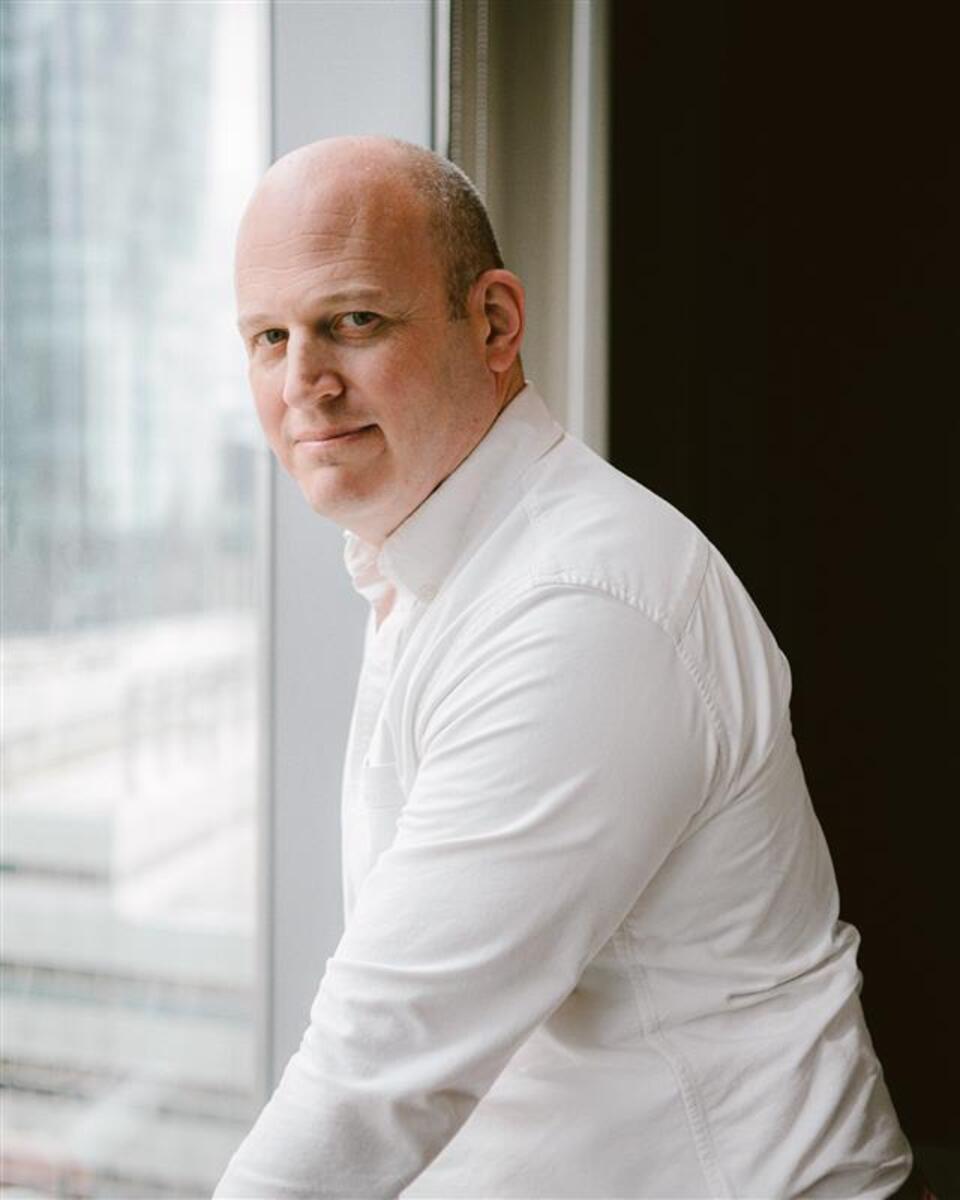
Two years ago, Jon Krieger had never played padel. Today, the 45-year-old typically hits for three hours a day, five or six days a week, and keeps an extra pair of gym shorts and his crisp white On tennis shoes in his office — ready to jump onto a court and fill in if someone’s foursome comes up short. That’s the job when you’re also the founder and CEO of a rapidly growing padel club.
During the pandemic, Krieger uprooted his family from their Manhattan apartment and landed in Tenafly, New Jersey. With two kids and a new suburb to figure out, he also had a familiar itch to find the next big thing.
Often compared to pickleball, padel is more of a spiritual cousin to tennis and squash. Points produce a series of lower-octave thumps, rather than the high-pitched pings that have driven neighborhoods with pickleball courts to the brink of insurgency. Because padel cannot be played on any public tennis court or parking lot, it creates a better business opportunity for entrepreneurs like Krieger.
Krieger decided to open Padel United Sports Club in Tenafly, New Jersey before he ever picked up one of the sport’s perforated rackets. The serial entrepreneur, who has spent more than two decades building brick-and-mortar consumer businesses and co-founded the Australian-inspired coffee chain Bluestone Lane, was that bullish from the data alone.
Like the points, which ricochet off the back walls, the sport has moved fast.
Once relegated to regional pockets of popularity in Mexico, Spain, and other corners of Europe and South America, padel has exploded in the United States. In the past three years, membership in the United States Padel Association has spiked 600 percent, jumping from less than 500 people in 2022 to nearly 3,000 in 2025. Hundreds of courts have sprung up across the country in major cities, such Phoenix, and midsized markets, such as Richmond, Virginia.
Nationwide, more than 112,800 people are estimated to be playing at more than 260 clubs, according to Patricio Misitrano, who founded Sports Haus in Norwalk, Connecticut, and Misitrano Consulting, a firm that advises pickleball and padel businesses. In the second quarter of last year, Misitrano, who also serves as CEO of Racket Social Club, a hybrid pickleball padel club with locations in Denver, Atlanta, and Houston, counted 688 courts in the U.S. In less than a year, that number has climbed to nearly 1,000.
It wasn’t until a conference trip to Miami in 2024, a few months into planning for his hometown club, that Krieger stepped onto one of the caged-in courts. After just a few points, he understood what the data had only suggested.
“It’s so addictive,” he says. “I played tennis for 30 years, pretty avidly. I haven’t played in a year and a half. I don’t think I will again.”
Krieger raised roughly $3 million from high-net-worth individuals and members of the local community and opened the $4 million suburban facility in January 2025. Within the first year, the business generated $3.5 million in revenue and reached profitability, and that pace has not slowed. The club is still growing 30 percent month-over-month.
Krieger is not the only founder feeling the padel fervor—or capitalizing on it. Startup executives have turned their early-onset obsession into a new outlet for networking, fundraising, dealmaking, customer events, and marketing campaigns. For some, like Krieger, the sport has inspired their next venture. For others, it’s launching their first.
Abigail McCulloch has spent the past two years betting on padel. The 29-year-old former consultant dropped out of her MBA program at Wharton to launch her own club, Alma Padel. After a seven‑month buildout, it opened about a year ago in Glenview, Illinois, a suburb of Chicago. Like Krieger, McCulloch has found that the still‑niche sport is attracting a growing number of consumers willing to pay to try it—enough that both clubs reached 7 figures of revenue and profitability within 12 months and are now eyeing expansion.
“We are pretty much booked every single night,” says McCulloch, who has increased membership to around 200 people and plans to open a second location in downtown Chicago this summer.
Demand is clearly there. As for exactly why padel has become entrepreneurs’ new favorite pastime, a few common threads emerged after speaking with more than a dozen founders who play. Many compared the sport to golf—the most corporate of all athletic endeavors—and said it offers the same opportunity to get to know potential clients, business partners, and investors outside the office, but without the half-a-day commitment of 18 holes. Instead, matches, which typically last 60 to 90 minutes, feel faster-paced and frankly, youthful.
David Gutstadt, co-founder and CEO of Ballers, a Philadelphia-based athletic club with $25 million in backing that offers padel, pickleball, squash, and indoor soccer, summed up the phenomenon as “competitive socializing.”
Like Gutstadt, many entrepreneurs highlighted the inherent social nature of the sport. Padel is nearly always played in doubles, and with a smaller court, teams duke it out within a relatively confined space. Foursomes are forced to interact in a way that doesn’t happen as much over a tennis net, and because padel is new to most people, trying it isn’t intimidating. Founders describe the barrier to entry as extremely low. While the sport has attracted plenty of tennis and pickleball players looking to add another racket sport to their regimen, racket experience is not necessary. Plus, by virtue of occupation, founders relish the new factor.
“Anybody who has any kind of athletic inclination can really make a big impact or really have fun right off the bat,” says Brad Korzen, co-founder and CEO of Proper Hotels, a boutique hotel group with 12 properties across California and Texas. Korzen got introduced to the sport four years ago during a family vacation in São Paulo. After coming home and finding no padel courts in Los Angeles, he decided to build his own in the backyard of his Beverly Hills home.
Korzen quickly collected new business contacts through pickup games and recognized an opportunity for his growing hotel group, which started offering wellness club memberships last year and has new properties planned for Dallas, Palm Springs, and Lake Tahoe, which will include an indoor padel facility.
“From day one, I always felt like, if we could introduce this to our customers, it’d be a hit,” says Korzen. “It kind of feeds itself. They quickly become consumed with playing.”
Michelle Cordeiro Grant has gone a step further by turning her padel habit into fuel for community building.The founder and CEO of the energy drink brand Gorgie started hitting at Reserve Padel, a club with three locations in Miami and two in Manhattan, after moving to South Florida in 2022. Since then, she has hosted about a dozen padel events for customers. She’s also planned an on-court founder meetup through the professional organization YPO.
Is there such a thing as padel overload? For a clean girl-coded brand like Gorgie, the answer seems to be no. Cordeiro Grant, whose drinks are sold in more than 20,000 stores, including Target, Walmart, and Costco, says her inbox is filled with requests from clubs interested in stocking Gorgie. She even launched a courtside collection of shorts, skirts, polos, and quarter-zips. Now, she’s partnering with DUS Padel, a club set to open in West Palm Beach later this year, to create a Gorgie-branded energy drink bar inside so members can pop open one of her sugar-free, low-calorie cans before or after a match.
After a game, why not a yoga class?
Club founders are not just cashing in on court rentals and clinics. Early on, they clocked the potential for broader appeal and cross-revenue. That approach has transformed padel into one of the hottest subsets of the wellness market. Given its connection to the startup world, it’s no surprise that the sport has captured the hearts and wallets of the Oura-ring-wearing cold-pressed-juice crowd.
In fact, half a dozen padel club founders who spoke with Inc. have invested in top-tier off-court amenities. The offerings range from gyms, yoga classes, and Pilates to pools, hot tubs, steam rooms, red light therapy, and in-house physical therapists. Saunas and cold plunges have become the baseline.
For a sport still in its early adoption phase, wellness facilities often serve as a funnel, attracting memberships from padel-curious types. At Padel United on a late Friday afternoon last month, a man in the sauna told me how life-changing the 45-degree cold plunge was— and mentioned that he doesn’t even play padel. That wellness-add has attracted 680 members, 70 percent of whom come in four or five days a week, spending an average of 3.5 hours at Padel United.
“We probably have 100 juniors and seniors in high school who spend 2 to 3 hours after school here,” says Krieger. I saw them firsthand: they arrived in a pack, hooded sweatshirts on, around 4:30 p.m.—about an hour after the first wave of elementary schoolers, who were already well into their clinic. The older teens grabbed rackets and took the courts, fueled by their parents’ $450-a-month family membership and, likely, a post-match smoothie on the same card.
Santiago Gomez, the founder and CEO of Padel Haus, is taking a different tack. His goal is for Padel Haus to become home for the sport’s best players. If Padel United carved out a suburban lane as the Bathhouse of padel, Padel Haus is trying to establish itself as the Nike or the Lululemon of the sport. Yes, there are still smoothies and cold plunges— even a podcast recording studio at one location—but at the club’s four outposts in Atlanta, Nashville, and two locations in Brooklyn, the focus is squarely on the game itself. The majority of revenue, 55 percent, comes from court bookings.
That was clear from the level of rallies that took place on a Friday evening earlier this month. The courts were mostly packed with men, but one court in the back was occupied by three young women, who were training with a pro ahead of their upcoming tournament in Miami. Gomez, who grew up playing the sport in its birthplace, Acapulco, Mexico, plans to be there to cheer them on. Club kits are in the works, he says.
His pitch feels tailor-made for all the founders, who explained their newfound padel obsession in terms of the periodic cycle of frustration and joy that comes with learning a new sport. While it’s relatively easy to get a rally going, mastering the strategy-heavy game takes years, and Gomez wants those founders to commit to that journey in his clubs. There’s a reason Bill Ullman, the president of the United States Padel Association and a founder himself, plays there.
Santiago Gomez, founder and CEO of Padel Haus, has ambitions to become the undisputed leader in the sport. Photography by Nathan Bajar
There’s been enough interest to propel Padel Haus to profitability. Each club generates between $1 and $4 million in revenue a year, and more are on the way. Locations in Dallas and Denver are slated to open later this year. Within the next month or so, the company will open its third Brooklyn club. Gomez spoke with Inc. from inside his new 20,000-square-foot location in Greenpoint. The warehouse space is still filled with wood shavings and saws, but the five new blue courts are upright, waiting for the players, who have already signed up for memberships. The “three-dimensional” nature of the sport keeps his members, especially the founders, coming back, he says.
“When you play tennis or you play pickleball, the ball just goes back and forth,
says Gomez, who opened his first location in Williamsburg in 2022 and has raised $22 million to date. “Your brain is wired that when a ball passes you in any sport, the point is over.”
Not in padel. That dynamic appeals to founders and builders, says Gomez, who likened the experience to a superhero complex. “They feel like they’re saving something that they couldn’t do in other sports.”
If Padel Haus is about the purity of the sport, Reserve Padel is carving out its own niche as the VIP section of the padel world. A Reserve Padel membership earns you early-bird ticket access to see its professional tournament series, alongside celebrity fans like Jimmy Butler. You can even compete yourself in one of Reserve Padel’s annual Pro-Am tournaments in Los Angeles, Miami, New York City, and in the Hamptons while sporting your Reserve Padel courtwear. One day, you will even be able to live and die surrounded by all of your Reserve Padel friends in your Reserve Padel condo in California, Marbella, Spain, or Cabo San Lucas.
To the naysayers who see the racket sport as more of a blip than a lifestyle, says Wayne Boich, the founder and CEO of Reserve Padel, who bootstrapped and fully owns his padel empire. “They probably haven’t tried padel.” He adds, “In the end, you don’t have enough courts. All these clubs are doing well.”
The technology powering racket sports
In case it’s not yet clear, there’s big money to be made from padel. It’s why Rosewood Exuma, a luxury hotel in the Bahamas, built a floating padel court, which debuted at Art Basel last year. It’s why Lacoste constructed one more than 5,700 feet above sea level in the French Alps this ski season. It’s why Tom Holland’s non-alcoholic beer brand Bero, which generated nearly $10 million in revenue in its first year on shelves and projects to triple sales in 2026, has started capitalizing on the sport, hosting a Pro-Am tournament at the Padel Social Club in London last summer. It's why Litquidity, the popular financial meme account that became a media company with 2.5 million followers, teamed up with financial technology company Ramp to launch an exclusive series of padel tournaments and socials in Miami and New York “for the industries top founders, operators, and investors.”
Patricio Misitrano, the founder of Sports Haus, believes the biggest startup opportunity in the sport goes beyond the actual clubs and says the biggest revenue streams and eventual exits will come from the backend technology and software powering padel’s rise. Whatever founder can crack the code for nationwide dynamic pricing—or vibe code it—will be a major winner, according to Misitrano, who also floats multiple ideas for padel-specific AI agents.
One such idea may come out of Fort Lauderdale when RacketX tips off in April. The racket business conference, which will feature many of these club owners on panels, will also feature a Shark Tank-style startup competition for early-stage racket sports businesses. Last year’s winner? Sport AI, a company that aims to bring tactical analysis to athletes in tennis, pickleball, and, of course, padel.