Happy New Year! Feels good to put 2025 in the books and look ahead to what’s going to be a great 2026.
We’re nearing the top of Inc.’s list of the best stories of the year, and today we’re going to school, Harvard Business School and its increasingly popular Founder Mindset course, taught by serial entrepreneur and senior lecturer Reza Satchu. With consulting jobs and, hell, entry-level positions increasingly scarce, entrepreneurship is becoming more popular at America’s leading business schools. Sharpen your pencils and learn:
How Satchu builds “a muscle called founder judgment” in students
Why he puts students in positions to fail in public during class
The influence Satchu’s founder-focused courses (there’s a companion Founder Launch class) are having on HBS overall
Since Inc. published this story, we returned to Satchu’s class for actress and entrepreneur Reese Witherspoon’s appearance to discuss a classic HBS case study on her and Hello Sunshine, which Witherspoon sold to Blackstone-backed Candle Media in 2021 for a reported $900 million. We also traveled cross country to Stanford, the business school most associated with startup creation, to see how it’s transforming entrepreneurship in the age of AI.
Three stories in the 1 Smart Business Story newsletter! Consider it a year-end gift. If you want to get me something, share this newsletter with a friend and encourage them to sign up. I promise it’ll be a great way to track the vanguard of fast-growth businesses in the year ahead.
—Mike ([email protected])
Inside Harvard’s Elite Founder Class, Students Learn to Build Amid Uncertainty and AI
In Reza Satchu’s ‘Founder Mindset’ course, which kicks off Wednesday, entrepreneurship is all about honing your judgment.
BY BRIAN CONTRERAS, STAFF REPORTER
Can entrepreneurship be taught? Harvard Business School senior lecturer Reza Satchu thinks so—and he wants more young people to give it a try.
On Wednesday, Satchu kicks off the latest iteration of his Harvard Business School course the Founder Mindset, which aims to inculcate in its students the methods and attitudes of a startup founder and, even more vitally, develop in them what he calls “a muscle called judgment.”
“Think of that as a founder development course,” says Satchu. “How do we create founder judgment? We go through all the various components of being a founder: ‘How do I come up with ideas, all in the face of uncertainty? Do I need a co-founder? How do I find one? What happens when, invariably, things go wrong?’”
Satchu, who himself previously founded a number of enterprises including the supply chain software firm SupplierMarket and the entrepreneurship-focused philanthropy NEXT Canada, started teaching his Founder Mindset course three years ago. This semester, the syllabus includes case studies around CloudFlare, Segway, and Nantucket Nectars, plus visits from the likes of Reese Witherspoon and Kevin O’Leary. He expects nearly 200 students to participate.
Getting hands-on with entrepreneurship
The course is part of a larger effort by Satchu to reshape what it means to be an HBS student. Since last school year, Founder Mindset has been accompanied by a spring semester class called Founder Launch, which tasks students with launching an actual business, from building a customer base to raising capital.
Satchu introduced that hands-on sister course after a flurry of Founder Mindset students asked him to lead them in one-on-one independent business projects. With too many prospective mentees to handle—ever the founder, he calls it “not scalable”—he ultimately built an entire class around how to develop a startup.

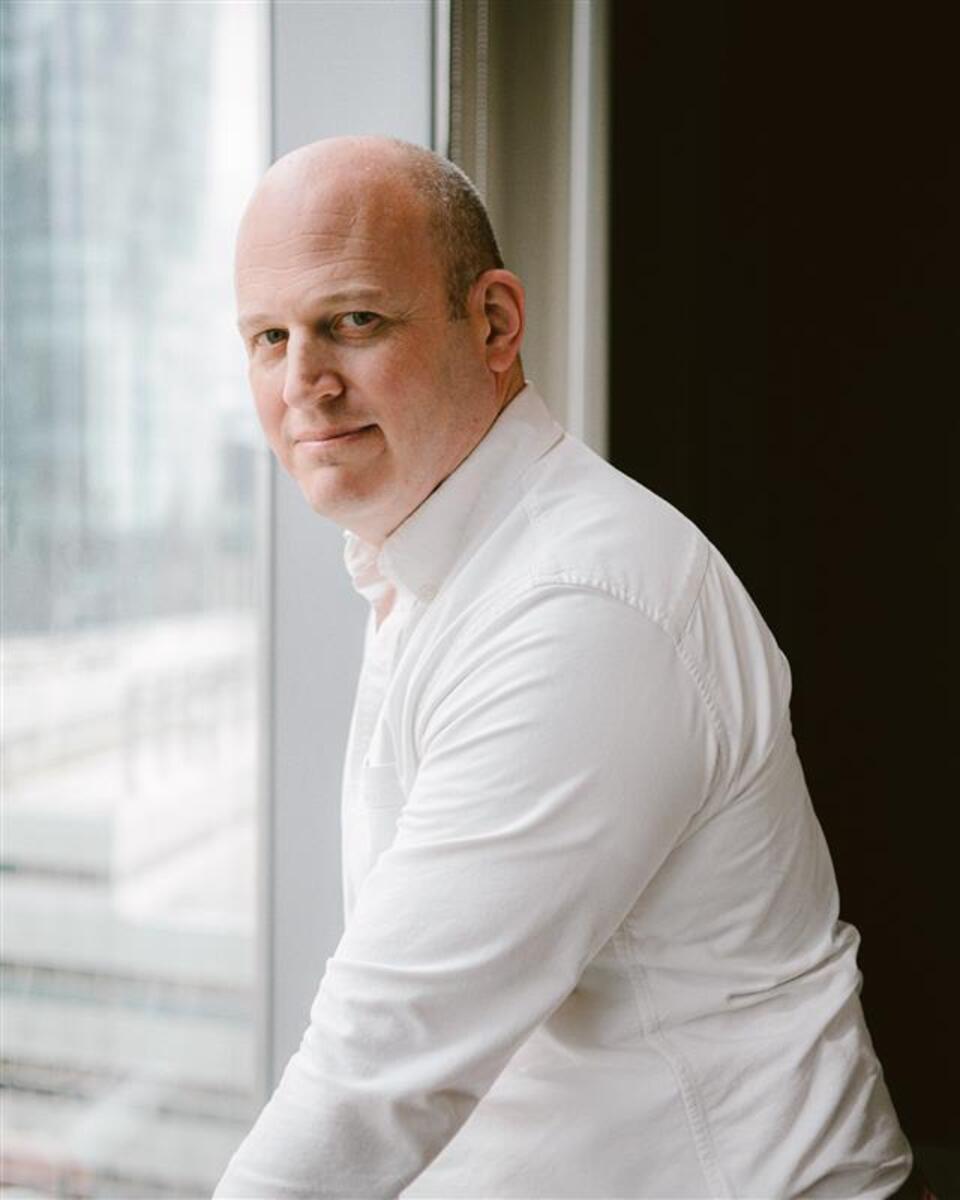
Reza Satchu. Photo: Courtesy subject
Founder Launch had 33 participants last year (18 women and 15 men), 30 of whom had taken Founder Mindset beforehand, per course data that Satchu shared with Inc. He says that last year’s cohort saw 23 students get funding, collectively raising more than $40 million before graduation.
“It was a massive success and it will now become a very big part of Harvard Business School going forward, and hopefully Harvard broadly defined,” says Satchu.
Thara Pillai, director of Harvard Business School’s Rock Center for Entrepreneurship, says that more than 85 percent of the program’s MBA students explore entrepreneurship during their education, and that about half of them start businesses post-graduation.
“Today HBS’s startup community is stronger than ever, particularly in technology and AI,” Pillai adds. “Boston’s thriving innovation ecosystem amplifies this momentum, making HBS increasingly competitive with Stanford and Silicon Valley as a destination for ambitious founders.”
Future-proofing founders
Satchu casts both of his founder classes—Mindset and Launch—as an antidote to the “comfort equals care” coddling that he thinks “elite institutions” otherwise offer their students.
“What I’m trying to teach is judgment, which means that people have to feel uncomfortable,” he says. “When people enter my classroom, it is all about stepping into uncertainty, imperfection, and making decisions.”
Part of that means putting students in positions to publicly fail, such as having them pitch Delta Air Lines CEO Ed Bastian during class and then dissecting what went wrong. But it also means forcing them to fully commit to their business ideas: Founder Launch participants are required to forego recruiting for other job prospects when they enroll in the class, which Satchu equates to “telling a Harvard Business School student that they need to chop off their left arm.”
All of this tough love is in the interest of honing the next generation of founders’ entrepreneurial judgment, the lecturer explains, which is increasingly necessary as AI steadily creeps into knowledge industries.
“The way in which we teach is completely going to change,” he says of the ongoing artificial intelligence boom. “Things like memorization are irrelevant. Things like pretending you’re the protagonist [are] less relevant. Actually, you must be the protagonist in the classroom, where you are suffering the consequences of your decisions; where you are calibrating risk and testing the one thing that can withstand AI, which is judgment.”

Photo: Samuel Berube
Satchu is himself an HBS graduate, and says that when he graduated from the program nearly 30 years ago, all the brightest students were looking to go into private equity. (That’s what he did, after all.) But nowadays, he says, becoming a founder is where the energy is.
“Our very best students want to found,” he says—a trend which he sees his courses as part and parcel with. “I want to transform Harvard Business School from a place where people come to seek jobs, meaning go work at McKinsey and work at Blackstone, to a place where they come to create jobs, starting with their own.”
(Asked about that shift, HBS senior managing director of career and professional development Kristen Fitzpatrick said that entrepreneurship has always been appealing to the student body, and that private equity as well as venture capital and consulting still entice a substantial number of graduates. Added Fitzpatrick: “The broad range of pursuits by our alumni after graduation is something we view as positive.”)
Taking risks and reaping rewards
You might be inclined to think there’s some core difference between the type of HBS student who will thrive in the structured corporate world of private equity, venture capital, or consulting, versus those inclined toward the rough-and-tumble, play-the-odds life of a founder. But Satchu is confident that entrepreneurship can be taught—even to students who’d never otherwise think they have a startup in them. In a clip from one of his lectures that he shared with Inc., a student who’d come to business school after several years working at the private equity firm KKR asks why young people should take the risk of becoming a founder when, famously, most startups fail.
“The idea of flailing around trying to get something off of the ground, and then it just doesn’t work out because you’re 90 percent likely to have that happen, feels like a really difficult thing to recommend,” the student says.
But Satchu doesn’t buy it. That mindset “makes no sense to me,” he tells her. “Your whole life has been in the top 10 percent, and now suddenly you’re just like everyone else, with a 90 percent odds of failure?”
Looking back on the interaction now, he has an even harsher assessment of students who use their MBA to go into a field such as private equity: “I’m like, ‘You are such a loser. Why are you doing that? Why would you want to be the 1,200th person at KKR, making no decisions?’”
That student, at least, was convinced. She ended up founding a better-for-you beverage brand that Satchu says was oversubscribed in its funding round.
It’s the sort of bold move he’ll be trying to encourage more HBS students to make this fall as the new semester gets underway.