Good morning, and let’s get an early Happy New Year in here from your friends at Inc.’s 1 Smart Business Story.
We’re counting down Inc.’s best stories of the year, and today we feature Invenergy founder and CEO Michael Polsky and his power-switching superpowers. Polsky’s built a renewable energy giant: Invenergy is the largest privately held developer of renewables in the U.S., amassing a development pipeline worth $150 billion. Then the new administration came in and declared war on the “Green New Scam,” particularly the kind of wind and solar projects that have been Invenergy’s specialty.
What’s an entrepreneur to do? Read on to discover:
Why Polsky’s focus is not on saving the planet—and why that’s a good thing for both his business and for environmentalism
How an engineering mindset has allowed Invenergy to transcend what’s in vogue in the energy business
What Polsky and his team have done to maintain a startup culture even as it’s become a billion-dollar behemoth
I hope you love this story as much as I do. Being able to learn from such creative thinkers is always inspiring. Let me know what you think at [email protected].
He Built One of the U.S.’s Largest Clean Energy Businesses. Here’s How He’s Navigating the Drill, Baby, Drill Era
“Maybe it’s my immigrant heritage,” says Invenergy’s Michael Polsky, “but I always feel like the underdog who has to run faster to survive.”

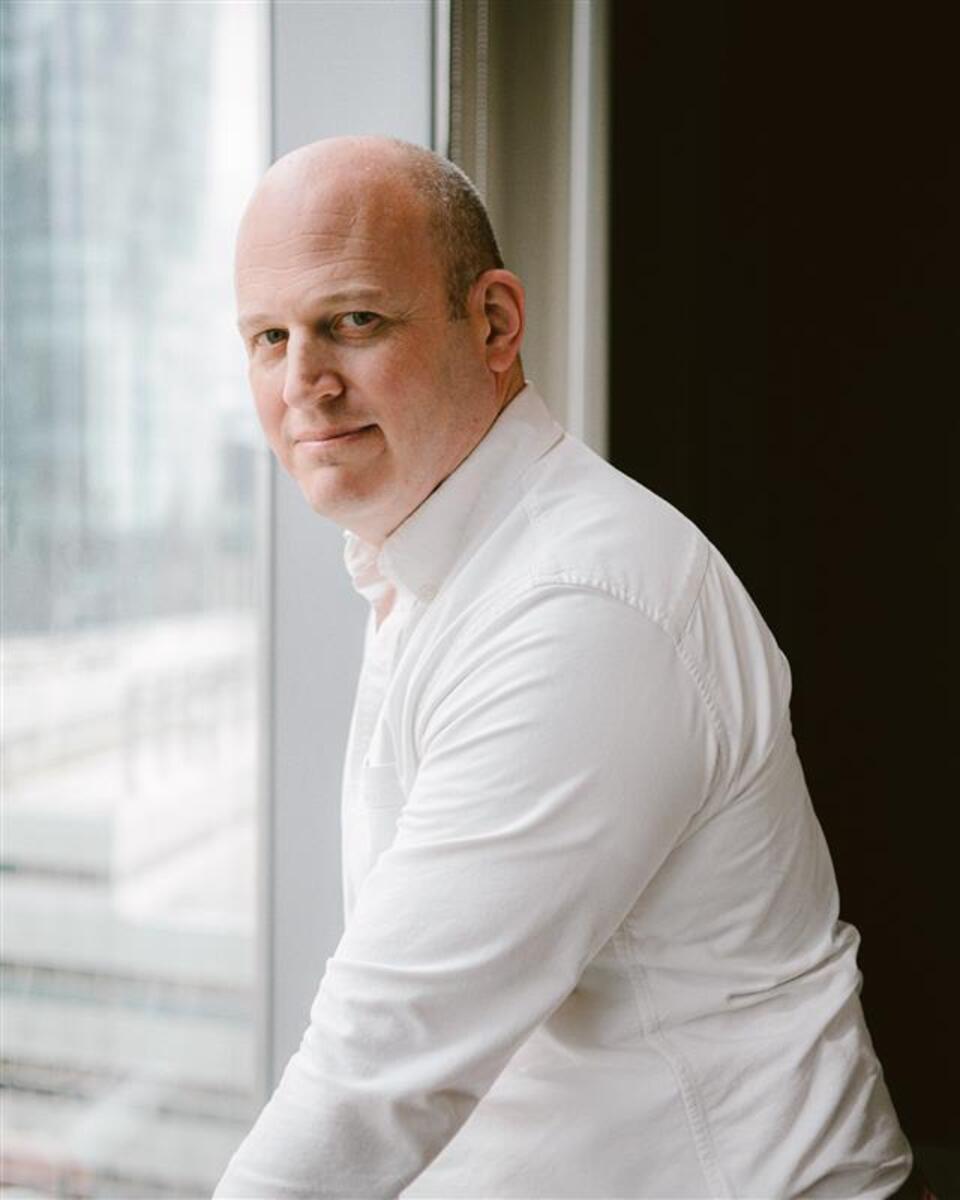
Michael Polsky. Photography by Taylor Glascock
On a trip to Scotland this weekend to cut trade deals with Europe, President Donald Trump spoke out on multiple occasions about what he called “ugly monsters”: wind turbines. “We will not allow a windmill to be built in the United States,” he said at a press conference with European Commission chief Ursula von der Leyen. “They are killing us.” In his second term, Trump has all but declared war on wind power, and is working hard to tilt the playing field away from all forms of renewable energy generation and back toward oil, coal, and natural gas. The so-called Big Beautiful Bill signed into law earlier this month rips away tax credits for wind and solar power, while boosting government support for fossil fuel. And that presents a major challenge for Michael Polsky and his company, Invenergy.
Polsky built from scratch a company that is now one of the world’s most formidable developers of renewable energy generation, nurturing staggering non-stop growth over two decades. Just since 2017, the company has tripled the number of megawatts generated by its projects, many of them wind and solar. That makes it the largest privately held developer of renewable energy in the United States—and that doesn’t count the reported $150 billion worth of new projects at various stages of development. Invenergy doesn’t release annual revenue information, but outside estimates place it at between $1 billion and $5 billion. “It’s hard to think of a better champion for renewable energy than Michael Polsky,” says Madhav Rajan, dean of the University of Chicago Booth School of Business.
However, Invenergy’s growth accelerated under a federal government that looked favorably on renewable energy, goosing it with incentives and speeding up permits, with an eye to cutting the climate-change-promoting carbon emissions of fossil-fuel-generated electricity. Those days are gone. Already this month, the administration struck a particularly vicious blow at Invenergy, undercutting billions in financing that had been lined up by the company over 15 years to fund a massive energy transmission project that represents a big and badly needed upgrade to a chunk of the struggling U.S. electricity grid.
Polsky claims that the government opposition might slow him down, but not for long. “Policies that make it more difficult are like facing a headwind for the first few miles of a marathon,” he says. Engineering, business acumen, and market demands, he insists, will trump the vicissitudes of government support.
If anyone in the renewables industry can continue to thrive in an era of drill, baby, drill, it’s Polsky, claims Sean Klimczak, global head of infrastructure at investment management firm Blackstone—which, despite being led by prominent Trump supporter Stephen A. Schwarzman, has sunk some $4 billion in Invenergy renewable projects. Klimczak points out that Polsky has always found ways to stay ahead of the constantly shifting opportunities and challenges in energy generation. “Most people who help create an industry like renewables are defined by their initial success,” he says. “Michael defines himself by his impact, and that causes him to constantly reinvent himself.”
Polsky’s latest reinvention is already underway, politics be damned.
It’s not easy keeping up with Michael Polsky. Literally: The 75-year-old engineer is fond of bounding up and down staircases inside the downtown Chicago headquarters of Invenergy, to show off various highlights scattered throughout the seven floors. These include a NASA-level control room graphically monitoring activity at the approximately 125 power plants the company runs in North America; various furnishings and objects d’art made from or otherwise suggesting components of renewable energy power equipment like turbine blades and solar panels; and amazingly detailed scale models of some of the company’s most ambitious projects. “We’re a very technical company,” he beams, before dashing off to the next highlight.

Michael Polsky, founder of Invenergy. Photo: Taylor Glascock
Polsky was born in the Soviet Union-era Ukraine, where he studied power-generation engineering at Kyiv Polytechnic Institute in the 1970s. Power generation was the least popular engineering discipline and hardly his first choice for a major, he recalls, but because of pervasive antisemitism in the country, it was the only one that would take him. Little did he realize that the bigots were doing him a favor. “Sometimes they exile you to an island, and it turns out there’s gold there,” he explains.
After graduating, he emigrated to the U.S., where he worked at a few different engineering firms. Sensing that coal- and natural gas-fueled electricity and heat “cogeneration” was ready to take off, he co-founded his own business in that industry, quickly taking it from nothing to over $100 million in value, and reaching No. 2 on the Inc. 5000 list in 1993. He sold it and started a second company focused on pure electricity generation from natural gas, riding a boom in that world to a valuation of about $500 million in 2001. At that point, he started eyeing additional energy opportunities.
Around that time, wind power was still an exotic technology of little interest to most big players, because it was relatively costly. Polsky had a different take. “I saw advantages,” he says. “It was a simple technology that didn’t need fuel. Your costs are all up front, which means you know what they’re going to be. And it was early stages, which means there would be a lot of technology improvements like better materials, and cost and reliability improvements with scale.” He looked at solar power, too, and saw much the same. In 2001, he co-founded Invenergy with seven other co-founders, most of whom are still with the company. Polsky provided $120 million of his own money to do it.
The notion of doing what makes sense comes up a lot with Polsky. It is a point of pride with him that he doesn’t let himself be distracted by whatever ethical or political values different people place on different approaches to generating electricity at different times. “In the end, people will buy your electricity because it’s cheaper, not because it’s greener,” he says. He doesn’t spin visions of emissions-free energy flowing seamlessly everywhere in all directions, opining that getting to better than 80 percent decarbonization of electric power in the U.S.—up from a current 21 percent or so for renewable energy—is an unrealistic goal for the foreseeable future. Natural-gas generating plants have to be part of the picture, he insists, and Invenergy still operates and builds them.
Saving the environment didn’t really enter into it, he insists. “That’s a nice side benefit,” he says. “I liked wind and solar because they’re just better technologies.” It didn’t bother him that the market for them was weak, and that the high up-front costs ensured that the business would be in the red for years. “We were following long-term profitability,” he says. “The business just made sense.”
Being free of biases toward any particular approach to energy enables Polsky to formulate strategy strictly from a business—and especially an engineering—point of view. It is the company’s engineering-first ethos in particular that has given it a leg up on competitors, he claims. “You can teach the business side to an engineer, but you can’t teach engineering to a business guy,” he explains. “We understand the technical challenges, and we build solutions around them. Then we figure out how to make it a good business.”
That approach was highlighted in a project the company undertook in 2020 in El Salvador. The country was dependent on fossil fuels and hydropower, but couldn’t generate nearly enough electricity from those sources to meet its needs. Wind and solar wouldn’t be able to close the gap, and while natural gas could in theory do it, there wasn’t an affordable way to build an inland gas storage facility that could be refueled fast enough.
Invenergy came up with a radical approach: Turn a large ship into a permanent floating fuel depot a mile off shore, and run a pipeline from the ship to a new 380-megawatt generating plant on shore. The project now generates a third of El Salvador’s electricity and provides enough extra power to sell to other countries.
A roll-up-your-sleeves-and-get-it-done attitude is a large part of Invenergy’s culture. “There’s a Midwestern entrepreneurial, working-class ethos that’s unmistakable at the company,” says Blackstone’s Klimczak. Invenergy co-founder and president Jim Murphy, a native Chicagoan who has been working with Polsky since the early 1990s, likes to say the company is in the “plate-spinning business.”
Maintaining its unique culture through the company’s massive growth has been a challenge, says Murphy. “It would maybe be a little disingenuous to say it’s still entirely a startup culture, but we try to maintain that feel,” he says. That’s one reason the company has refused to go public, he says, even though many other independent power developers have made killings doing so.
Though the company boasts about 2,800 employees and an estimated $1 billion or more in annual revenue, Polsky still considers Invenergy an upstart. “We’re like a mouse competing with pythons,” says Polsky. “We’re up against big public companies, government utilities, and funds with unlimited resources. Maybe it’s my immigrant heritage, but I always feel like the underdog who has to run faster to survive. It’s a feeling that there’s always danger behind you.”
The feeling suddenly seems less far-fetched, thanks to a White House that is bent on doing whatever it can to set the green-energy industry back.
President Trump and his supporters in Congress have taken steps to freeze or cancel billions of dollars worth of grants, subsidies, and tax credits for all sorts of clean-energy endeavors, ranging from those supporting new factories for renewable-energy-generation components like solar panels and batteries, to those incentivizing electric cars. The giant tax and spending bill that Congress recently passed, at the president’s urging, ends most of the Biden-era financial incentives to the clean energy industry.
Trump has long expressed particular ire for wind generation, an enmity that reportedly dates back to his battle to kill an off-shore wind farm in Scotland that he argued would spoil the view from a golf course owned by his family business. One of his first acts as a second-term president was to direct government agencies to halt permitting and other approvals for wind projects, including some projects that were already fully approved and permitted by the government.

Trump at opening of the Trump International Golf Links course in Balmedie, Scotland; the Aberdeen Bay Wind Farm is in the background. Photo: Brendan Smialowski/AFP via Getty Images
Many state and local agencies and civic groups in red states are following Trump’s lead in trying to stop green-energy projects; some 400 counties have banned or limited wind turbines. As much as 40 gigawatts in new wind energy projects—enough to power as many as 40 million homes—are now at some risk from the Trump-led efforts. Solar projects are under fire as well.
Meanwhile, Trump’s tariffs will hit the entire energy industry hard, because all segments rely on overseas materials and components for new equipment. But the wind and solar industries are particularly reliant on overseas components like solar panels and the steel in turbines—and may now become even more dependent on them, given that the Trump administration is killing support for new U.S. green-energy component factories.
The administration’s war on clean energy is certainly a concern for Invenergy, says Murphy. “What we welcome in this business is a stable policy landscape,” he says. “It’s unfortunate that the renewable side of our industry has become extremely politicized; it adds another layer of complexity that we have to deal with.” An unexpected shift in policy, he adds, can make the difference between a project succeeding or failing.
Yet Trump’s efforts to crush clean energy may ultimately amount to, well, spitting into the wind. The main reason is that clean energy has become relatively cheap and plentiful, and America’s demand for it is already sky-high and growing. That’s especially true as the explosive growth in processing-intensive artificial-intelligence applications drives the need for more and bigger data centers, expected to account for almost half of the increased demand for electric power over the next five years, according to the International Energy Agency.
It’s hard to overstate how important renewable energy has become to meeting those electricity needs. Clean energy is expected to account for 93 percent of the power capacity added to the U.S. electric grid in 2025 alone, says the U.S. Energy Information Administration. Natural gas provides about 38 percent of U.S. power generation, but that number has been shrinking and will continue to do so—not only because of longstanding subsidies and environmental concerns, but also because the supply of natural gas power generators has been shrinking. “It’s hard to find one in the market right now, and they won’t be readily available for the next several years,” says Ani Dasgupta, president and CEO of World Resources Institute, a nonprofit global research organization. “The fastest way to build capacity is with renewable energy.”
In addition, while natural gas generation is a mature technology, solar and wind energy continue to become more efficient. New solar panels are over 250 percent as efficient as early versions. Wind turbines are about four times as efficient as older models. That progress is ongoing. On top of that, large batteries that can store solar- and wind-generated energy and make it available at night or during windless periods are making green energy more cost-efficient, and are coming online at a rapid pace—some 32 gigawatts worth of storage will be added in the U.S. in 2025 alone, predicts consulting firm Deloitte. “The federal policy changes will offer some relief to fossil fuel power generation, but renewable energy will continue to lead new capacity additions,” says Marlene Motyka, Deloitte’s U.S. renewable energy leader.
Trump’s policies will indeed create obstacles for Invenergy wind and solar projects, says Polsky—but only in the shorter term, and only to a moderate degree. “An energy project takes years to develop and build, and operates for decades,” he says. “So we take that long view. At the end of the day, technology listens to the market, not politicians. The market will go with the technology that makes sense.”
But the futility of trying to kill wind and solar energy hasn’t stopped the Trump administration from trying. And it has let fly its latest arrow right at the heart of Michael Polsky’s most ambitious and far-sighted project yet.
Invenergy has been set to start construction in 2026 on a massive energy transmission line called the Grain Belt Express, an $11 billion infrastructure project that will deliver power some 800 miles across Kansas, Missouri, Illinois, and Indiana. Building more power generation without more transmission, claims Polsky, would be like building more iPhones without a big-enough mobile network to support them. “If you’re talking about energy supply in the U.S., the number-one challenge is infrastructure, and transmission is the number-one challenge in infrastructure,” says Polsky. “I want to be at the tip of that spear.”
The Grain Belt Express has had bipartisan support from both state and federal government. But in late June the project ran into a new, unexpected roadblock: Missouri attorney general Andrew Bailey, claiming to represent the interests of a number of state landowners objecting to the transmission lines crossing their properties, opened an investigation into whether Invenergy has overstated the project’s benefits.
This month, Invenergy sued to block the state’s demand for the company’s internal documents relating to the project, questioning the legality of the investigation and Bailey’s authority to conduct it. Many landowners in Missouri and elsewhere impacted by the project had already signed agreements.
Then, on July 23, at the urging of clean-energy-hating Missouri senator Josh Hawley, the Trump administration joined the attack on the Grain Belt Express, and in a big way: The Department of Energy canceled its $4.9 billion loan guarantee to the project, endangering the project’s financing.
That sudden move flies in the face of all logic, insists Chris Seiple, vice chairman of power and renewables at energy industry consultancy Wood Mackenzie. “Everyone in the industry is trying to figure out how to scale the grid as quickly and inexpensively as possible, and Michael Polsky has been brilliant at figuring out economic solutions that help solve these challenges,” he says. “That’s what makes this particular government decision so baffling. The U.S. seems on a path to make energy a very ideological thing.”
In an email to Inc., Polsky insisted the project would keep moving forward, in spite of the DOE’s withdrawal of support. “In my four decades as an energy entrepreneur, I’ve never seen such a dramatic increase in energy demand,” he says. “We’re moving forward as we always have, putting one foot in front of the other to deliver what our customers are asking for: innovative energy solutions to meet growing demand, enabled by the critical infrastructure required for a resilient, reliable American power grid.”
Invenergy may well be able to move ahead without the DOE’s backing, insists Chaz Teplin, a principal at the nonprofit energy think tank Rocky Mountain Institute. “The Grain Belt Express spent 15 years working out all the challenges of getting permits from local landowners and state utility commissions, only to have a couple of politicians trying to undermine it at the last minute,” he says. “This project solves some big problems, and I wouldn’t be surprised if an Amazon, Meta, or Microsoft stepped in, in place of the DOE, to guarantee the loan.”
Meanwhile, Polsky intends to keep moving ahead with clean energy development at full speed—to wit, the thousands of massive solar panels Invenergy is planting across 18,000 acres in Texas, which will make it one of the largest solar farms in the U.S. But Polsky has never limited himself to the same particular lines of business for long, and he isn’t about to start now. Having grown from coal co-generation to natural gas generation to wind and solar farms, he is now pushing Invenergy into entirely new corners of the energy industry, and exploring others.
Invenergy started manufacturing solar panels in 2024 in a one-million-square-foot factory in Ohio, instantly becoming one of the largest solar-panel manufacturers in the U.S., by the company’s estimation. Polsky is also considering starting a battery-storage manufacturing plant. And in March the company launched operations at its first clean hydrogen facility in Rock Falls, Illinois, emissionlessly producing hydrogen used for clean fuel and energy storage. Polsky says he’s prepared to bring the company into nuclear power, too, if the price point comes down enough to make it competitive with renewables. “We wouldn’t build our own reactors, but we can do everything else,” he says.
Earlier this year the company also opened a new facility outside of Chicago. The 135,000-square-foot space offers technical training, a machine shop, and a parts warehouse for wind, solar, and energy storage equipment, along with what may be one of the most advanced power-plant control facilities in the industry. In addition to monitoring operations for its own power-generating plants in North America, the center also monitors plants on behalf of dozens of customers. “Every time I build a new control center, I think there’s no way we’re going to outgrow it,” says James Rafferty, who heads up site operations for the company. “But this is our fourth one.”
Polsky will continue to try to push the boundaries of the energy industry, and on multiple fronts, insists Blackstone’s Klimczak. “He has the ability to evolve in days in ways that take other people years,” he says. “He’s made Invenergy the Swiss army knife of power.”
But first Polsky will have to evolve a way to push the unprecedented and much needed Grain Belt Express across the finish line. Having beefed up his lobbying resources in Washington, he shows no interest in caving to an administration that wants to move the clock backward on energy just when the U.S. most needs to move forward. Polsky believes the logic of the energy markets will help him prevail. “We’ll just do what makes sense,” he insists. Even if the government doesn’t.