Good morning. It’s peak football, with both meaningful college and NFL games on seemingly every day. Whether you’re glued to the set or merely a bystander, we’ve got a great game-within-the-game feature for Inc’s 1 Smart Business Story today: the bruising battle to make and sell the best possible football helmets.
Nicholas Esayian, founder and CEO of Light Helmets, believes that heavier headgear is exacerbating brain injuries, and he’s made, er, headway in getting his helmet design into “every NFL locker room,” as he notes. So why does Light have just 1 percent of the market, driving Esayian to call foul on Riddell, which has an 80 percent share and that he accuses of monopolistic behavior limiting his growth and stifling innovation? Brace yourself for impact as we explore:
The market forces, including industry consolidation, that make it hard for upstarts like Light Helmets to break through
Why even some of the experts who rate Light’s helmets highly aren’t convinced by Esayian’s thesis a lighter helmet is inherently better
How Esayian is using all his entrepreneurial chops to find daylight for his company
What’s your favorite current David versus Goliath story? Email me at [email protected] and maybe you’ll inspire a future 1 Smart Business Story.
The Business of Selling Football Helmets Is More Smash Mouth Than the Game Itself
Nicholas Esayian’s Light Helmets offers an innovative approach to keeping players safe and already has NFL pros wearing its product. But can he break through the entrenched competition’s defense?
BY BRIAN CONTRERAS, STAFF REPORTER

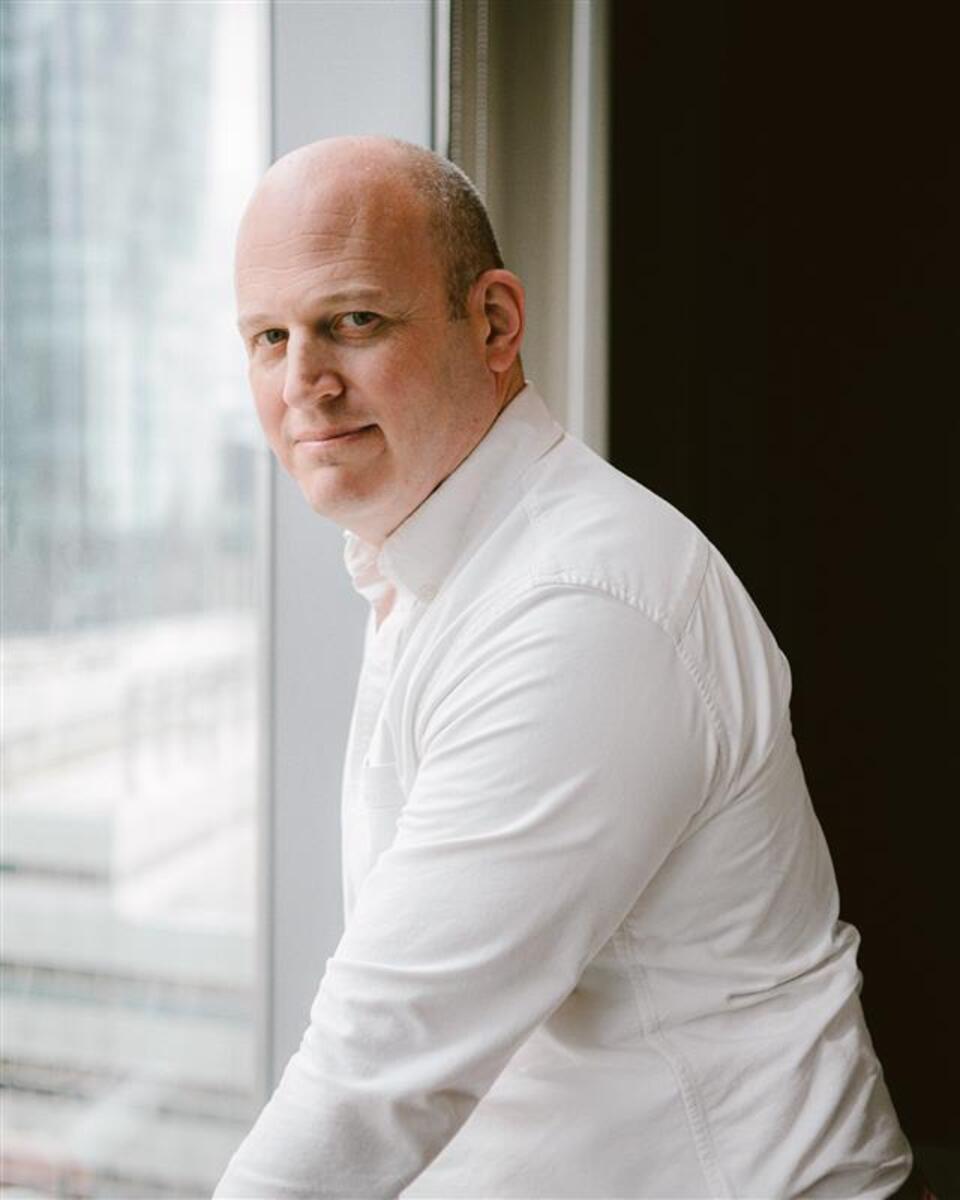
Nicholas Esayian of Light Helmets. Photography by John Francis Peters
As the lone Armenian at a Lutheran high school, Nicholas Esayian sometimes struggled to make friends in his teens. Joining the football team offered him a shortcut to fit in, and instilled in him values—confidence, determination, grit—that he carried with him through subsequent years of college and semi-pro ball.
Now 57 and the CEO of a football helmet startup called Light Helmets, Esayian is putting those values to work off the field—and once again finds himself in the position of an outsider with something to prove.
Light Helmets, based in Carlsbad, California, is both the youngest and smallest of the three major American companies that make football helmets, claiming about 1 percent market share. Riddell, which used to be the official helmet partner of the NFL, says nearly 80 percent of NFL players use its helmets. Certor argues that number is closer to 65 percent, with the remaining 35 percent using its own Schutt and Vicis brand helmets.
Esayian describes Riddell as a “300-pound gorilla in the room” that essentially has a monopoly on the market. He’s not alone in leveling that sort of criticism: Guardian Sports, the startup behind the soft padded caps that some NFL players have started wearing on top of their helmets, says Riddell’s dominant position in the industry stifles innovation and impedes player safety.
Amid ongoing concerns about concussions and CTE in the sport, Light’s driving premise is that football helmets have grown unnecessarily heavy, making tackles and falls more violent than they need to be. However, Esayian says an unequal playing field has made it harder to get Light’s lighter helmets onto players’ heads.
“Competition breeds excellence,” Esayian says. “We’re here to return that.”
Lighting it up
Following his time as a high school quarterback, Esayian played briefly as a receiver at the University of Wisconsin-Whitewater, and then, returning to his QB roots, for a semi-pro team called the Milwaukee Express. But after suffering a shoulder injury, Esayian pivoted into an entirely different sport: auto racing. From about 1992 to 2018, Esayian drove professionally, competing in the Pirelli World Challenge and International Motor Sports Association races. Although head trauma hadn’t been a pressing concern during his football career, he says racing got it on his radar after he suffered seven concussions behind the wheel and lost a teammate to a severe head injury.
In 2015, Esayian met with Bill Simpson, of the Simpson racing gear brand, at the Long Beach Grand Prix. Simpson had co-founded SG Helmets, which focused on building lighter-than-usual football helmets, but had reportedly grown frustrated with the NFL and its equipment managers’ stubbornness. He thought Esayian would be a good candidate to take over the company.
Entrepreneurship wasn’t new territory for Esayian; on top of his racing endeavors, he owned a marketing company and had been involved in various other businesses as well. So in 2018, after attracting a group of investors, he acquired SG and soon rebranded it Light Helmets. Esayian then revamped the company’s helmet designs and set about building a customer base at every level of football, from Pop Warner youth leagues to the NFL.
Light’s total investment capital raised since the acquisition stands at just over $16 million, including the first $5.5 million of a planned $10 million Series A that will leave the company with a $32.5 million post-money valuation. Among its backers are Firstrust Bank CEO Richard Green, the late FedEx founder Frederick Smith plus his son Cannon, and three former Navy SEALs who saw the importance of lightweight safety gear while serving overseas.
Some current and former NFL players have also backed the brand, including Jets quarterback Tyrod Taylor, Saints defensive end Cameron Jordan, Cardinals defensive end Darius Robinson, and retired quarterbacks Tony Romo and Drew Stanton.
During the 2024 NFL season, about a dozen players wore a Light helmet all year, with another 15 or so using them on and off, Esayian says. That’s on top of about 100 NCAA players and thousands of high school and youth players who’ve bought into the brand, the CEO estimates. This season, Esayian says 35 to 45 pros wear a Light helmet on any given week. “We’re in every NFL locker room now,” he says.

Photo: John Francis Peters
Questioning the consensus
Central to Light’s product design and marketing strategy is the premise that heavy football helmets have made on-field collisions unnecessarily forceful.
“The weight of this is the enemy,” Esayian says of helmets, because small variances in weight become big differences in force upon impact; in an 80-G impact, for instance, three extra pounds of helmet weight becomes 240 pounds of extra force on someone’s cervical structure.
Repeated over and over during a career, he continues, that extra force can cause cumulative damage, with helmet weight being “a contributing factor to the likelihood and frequency of injury” in many impacts.
“The more force you shake the Chobani yogurt with,” he says by way of an example, “the more disruptive it is to the internals.”
Esayian says there are about 10 doctors on Light’s advisory board, although not all of their names are publicly listed on the company’s website. Two or three of them, he says, are also investors in the company. One such investor-adviser is Michael McDermott, the chief medical executive at Baptist Health’s Miami Neuroscience Institute, who says he became convinced that football helmets should be lighter after having played the sport himself and done sideline medical work with the NFL.
“The other manufacturers were heading in the wrong direction, adding more foam, adding more plastic, increasing the weight of the helmet,” McDermott says. He points to Newton’s second law: force equals mass times acceleration. Most of the variables in a football collision are fixed, he says, such as neck strength and head size—but you can change how much the helmets weigh.
“If you make the mass of the helmet higher, the force will be higher,” McDermott says.
Some of Light’s industry peers, however, have reservations about Esayian’s focus on weight. Erin Hanson, founder and owner of Guardian, says she likes the goal of lighter helmets but also thinks more mass can be a net positive if it comes from adding safety features to helmets. (NFL research indicates that Guardian’s extra padding can absorb at least 10 percent of the force from a blow.)

Nicholas Esayian. Photo: John Francis Peters
Jeremy Erspamer, Certor’s CEO, said there’s a balance to be struck between helmet weight and energy absorption. And Riddell CEO Allison Boersma said her company considers weight from a wearability perspective, but is “aware of no data to support the claim that a lighter-weight helmet performs better on the field.”
In February 2025, the National Operating Committee on Standards for Athletic Equipment—an organization that sets equipment standards that the NFL, the NCAA, and the National Federation of State High School Associations adhere to—finalized its first-ever standards for youth football helmets, which included a 3.5-pound weight limit.
NOCSAE executive director John Parsons noted, however, that there is no weight limit in its standards for players in high school and beyond, and added that his organization does not comment on individual helmet manufacturers’ design choices.
Meanwhile, the Virginia Tech Helmet Lab, which conducts independent analyses of football helmets and other headgear, ranked Light’s Apache-model helmet the number-one varsity helmet in the country in 2025 for its ability to “reduce both linear and rotational head acceleration from impact scenarios.” It also ranked the Light Apache Lightning Youth number-one for youth helmets.
Nevertheless, the Helmet Lab’s outreach director, Barry Miller, does not fully buy Light’s thesis, either.
“It kind of depends on the impact scenario whether a heavier helmet is advantageous or not,” Miller said. “For the youth players, having a lighter helmet that they can better control their heads and necks, because they don’t have strong necks, is probably advantageous. But when you get to the varsity and NFL level, those guys are big and strong, and I don’t know that one pound makes that big of a difference.”
The NFL also offers its own yearly rankings of helmets, in coordination with the Players Association and biomechanical experts who conduct original lab research. The latest ranking, released in April, had a Riddell helmet in first place, followed by four Certor helmets and then, in sixth, a Light helmet: the Gladiator Thunder, which is partially 3D-printed and targeted at NFL and NCAA players. Light helmets scored closer to the top when it came to position-specific testing for quarterbacks and linemen.

The joint engineering and equipment safety committee of the NFL and Players Association says that efforts to build better helmets do sometimes involve adding more weight, but that “in those scenarios, both on-field and laboratory test data show that weight helps to protect NFL players in impacts.”
The league itself is agnostic as to how helmet companies go about improving player safety, so long as they get results, says Jeff Miller, the NFL’s executive vice president for public affairs and policy as well as health and safety initiatives.
“Our goal all along has been [to] encourage the development of helmets that provide more protection for the players and therefore are safer on field,” he says. “Our concussion rates are lower and players are safer in large part as a result of improved helmet technology. … I don’t take a position on the weight or the construction or the materials in the helmet, as long as it can perform well in the laboratory testing and then perform well on-field.”
Breaking concentration
Light’s efforts to gain traction among players have been challenged by the dominance of Riddell and Certor. Esayian says that Riddell’s decades in the spotlight have allowed it to promulgate the narrative that heavier helmets are better—a narrative some customers still buy into—and that NFL equipment managers often have long-standing relationships with Riddell and Certor sales reps, which can make customer acquisition “a horror show.”
When he offers to talk them through the benefits of lighter-weight helmets, he says, he gets “stonewalled.” Those difficulties trickle down to the college and youth markets, he adds, where the equipment managers (or the players’ parents) often just copy what they see the pros doing.
The American wholesale market for football protective gear, including helmets and other equipment, was $501.5 million in 2024, according to data from the Sports and Fitness Industry Association that Certor’s CEO shared with Inc.
Notably, the football helmet sector has seen increased concentration in recent years following a series of M&A plays, including the combination of Vicis and Schutt under the Certor umbrella brand, and Riddell’s acquisition of the helmet company Xenith earlier this year. (Xenith had found pick-up in the NFL, but announced last winter that it would be pausing operations. Riddell says its acquisition was motivated by the strength of the brand’s shoulder pad line.)
Schutt also acquired sports gear company Adams USA’s football helmet assets in 2011.

Light Helmets’ offices in Carlsbad, California. Photo: John Francis Peters
Meanwhile, in 2015 the sports equipment company Rawlings pulled out of the football helmets space after only a few years trying to break into it. Esayian says that retreat was because of “predatory” behavior by Riddell, which at the time had been bringing patent infringement claims against Rawlings. (Rawlings reps said at the time that the move was a strategic reprioritization unrelated to legal pressure. Boersma, Riddell’s CEO, says that protecting her company’s intellectual property is a business imperative, the aggressiveness of which is “ultimately determined by the infringing party.”)
Light also objects to an exclusive deal Riddell has with the NFL that allows the company to sell collectible helmets with NFL logos on them.
In 2014, the league said that helmets which are actually used during games can’t bear their manufacturer’s logo on the bumper, per ESPN. But Riddell’s license to make collectible helmets offers it a workaround, Light says, because its marketing materials can instead depict realistic-looking replica helmets that bear both their name and NFL trademarks. For instance, Riddell’s website features collectible 49ers, Eagles and Bills helmets that look like the real thing but also include the Riddell logo front and center. No such cross-branding appears on the Schutt, Vicis, and Light homepages, even though those helmets also get worn during NFL games.
(Riddell’s response: “We have been the license holder for NFL collectibles since 1989, long before we were leaders in on-field market share.”)
Light isn’t the only one frustrated with the competitive landscape around football headgear.
Another relatively new entrant to the market is Guardian Sports, the family-owned business behind Guardian Caps, whose leaders take issue with the helmet sector’s degree of concentration. Hanson, the Guardian Sports founder, says Riddell’s dominant market position means it can effectively dictate what innovation does and does not find mass adoption.
“If you only have a big player that’s got 80-something percent of the market, then they have the ability to say, ‘Hey, the only innovation that you’re going to get is what we create here, and we’re going to make sure that we can chase the smaller players out of the market,’” Hanson says.
Erspamer, Certor’s CEO, said that the years-long development timelines for new helmets, plus the complexities of manufacturing them, means it can be challenging for newcomers to break into the market. Riddell’s “litigious nature and over-leveraging of their souvenir license agreement at the NFL only exacerbate these challenges,” he adds.
But he said he welcomes competition, including from Light, and credits the NFL’s process of ranking helmets every year with pushing forward innovation “even though there’s more limited competition” in the sector.
Meanwhile, NFL executive VP Miller says that the league itself doesn’t take a stance on the level of concentration in the helmet industry “as long as there’s continued improvement and evolution in the helmet space—which there has been.”
He also noted that the NFL funds cutting-edge innovation in the head-protection space. Vicis, Xenith and Guardian Sports are all prior recipients of that money, as is Light’s Montreal-based engineering partner, Kollide.
“I don’t think that there are such significant barriers to entry to prevent new companies … with a better idea to be able to come in and prove that out,” he says. “History shows that that is possible, and in fact, has happened.”
As for Riddell, Boersma said that her company is proud to have widespread adoption among athletes, and that Riddell has accumulated its substantial market share by “prioritizing both on-field protection and performance.”
“Our share reflects performance and service, not lack of competition,” she added.
Esayian, for his part, maintains that he’s going up against entrenched forces in the industry that have slowed the rate of innovation and the adoption of better products. Nevertheless, he’s charging headlong into the market, buoyed by Light helmets’ rise up the ranks of the Virginia Tech and NFL evaluations.
Eventually, he says, he’d even like to move outside the football market to other types of helmets: biking, skating, lacrosse, and hockey, or maybe even sectors beyond sports such as construction and the military. That could set the company up to one day go public, he says, or make it an appealing acquisition target for private equity firms and sportswear giants such as Under Armour or Adidas.
Whatever sort of exit eventually comes down the pipeline, Esayian’s ambitions are big: Anywhere there’s a head that needs protecting, he sees business opportunities, too.