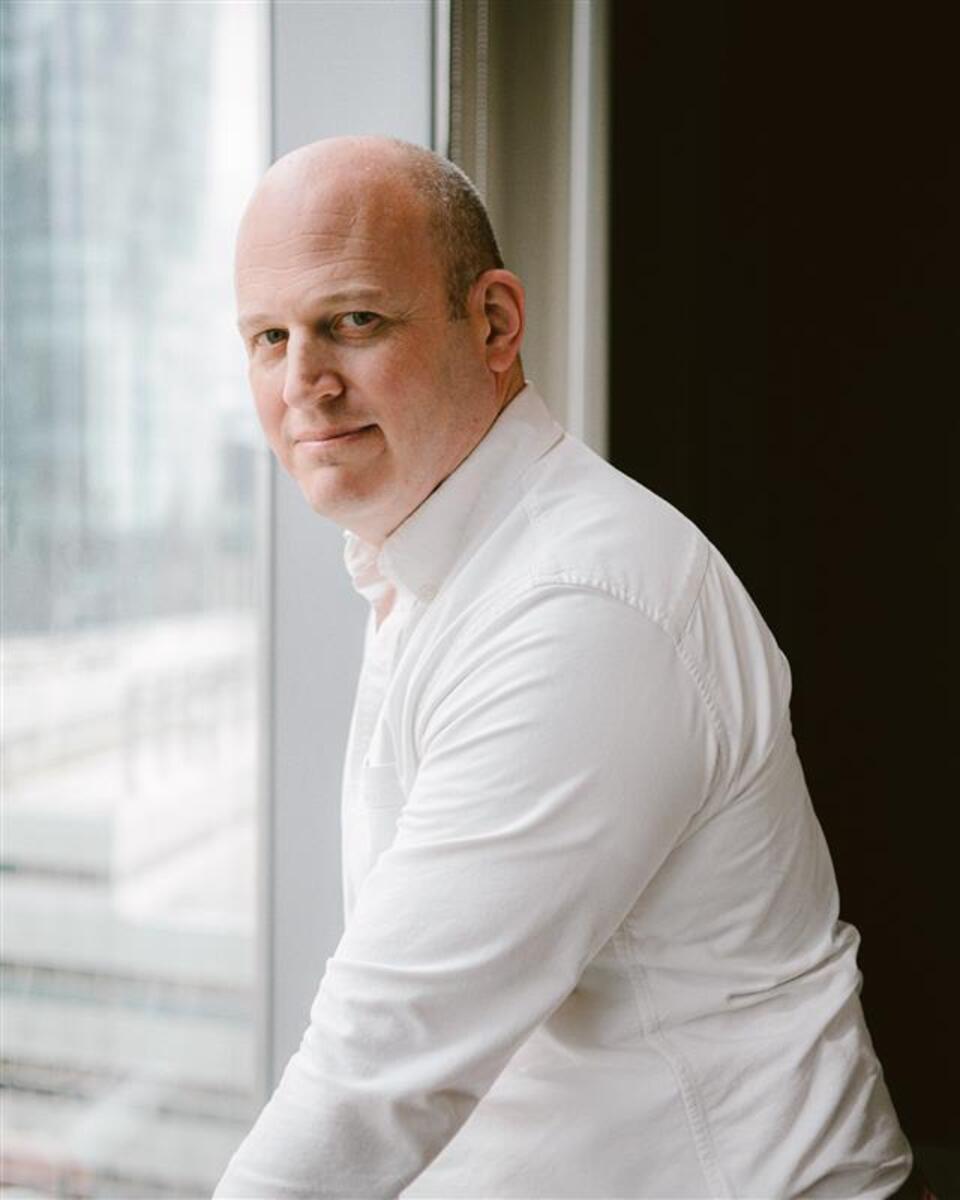

Hello and Happy Monday! Welcome to Inc.’s 1 Smart Business Story. One of the biggest misconceptions about startups is that great companies begin with funding and a nice idea. More often, they begin with a genuine obsession.
That’s the philosophy driving entrepreneur and investor Mary Minno, who launched the early-stage venture capital fund, AI Health Fund, to back researchers and technical operators at the intersection of AI and healthcare innovation. Rather than waiting for institutions to solve various healthcare problems, of which there are legion, Minno is investing in operators who understand the system firsthand but need help turning breakthrough ideas into viable businesses.
As Kevin J. Ryan reports, the AI Health Fund, which secured a $1 million investment from legendary venture capitalist Tim Draper, has already invested in 13 startups. But what makes Minno’s approach stand out is how early she’s willing to bet on founders at very early stages—in many cases, they haven't even incorporated yet.
Instead of relying on traditional metrics like traction or historical data, she looks for something harder to quantify: deep market insight, relentless execution, and the ability to keep building before outside validation arrives.
In this piece, you’ll discover:
Why some of the best founders around start building before they secure funding
What separates technical innovation from an actual scalable business
How an investor like Minno assesses whether a founder has conviction
She’s Invested in 13 AI Startups. Her Best Advice for Founders? Stop Waiting for Funding
Having raised $1 million from Tim Draper for her AI Health Fund, Mary Minno is determined to fix healthcare with technology.
BY KEVIN J. RYAN
When a family member was diagnosed with leukemia last year, Mary Minno witnessed how challenging it was to find specialists—and how long patients often had to wait for treatment. So Minno, an entrepreneur and investor who sold her social media company, Evergive, in 2016, set out to launch a venture firm that focused specifically on health technology. She reached out to Esther Wojcicki, her former high school journalism teacher and also the mother of 23andMe co-founder Anne Wojcicki and the late YouTube CEO Susan Wojcicki. Together, they discussed how academia is filled with researchers who have big ideas but little means for commercializing them. Late last year, after raising funds from friends and family and securing a $1 million investment from legendary venture capitalist Tim Draper, Minno launched the AI Health Fund. Esther serves as a founding adviser, while Anne is an operating partner.
“We’re really doing this so we can improve the healthcare system in our country,” Minno says. “Whether that be from a consumer standpoint—giving consumers access to more data, making decisions about their health, streamlining the operations of a healthcare system—or improving the lives of the doctors, nurses, and first-line responders, we’re just really excited about the unlocks that are coming with AI in the healthcare industry.”
So far, the firm has invested in 13 startups, writing checks for between $50,000 and $150,000. About half of them have taken up residency in the firm’s accelerator arm, Treehub, and some have gone on to secure seven- and eight-figured rounds.
On the heels of the AI Health Fund’s public launch in April, Minno spoke with Inc. about the fund, separating hype from reality, and public hesitancy about AI.
Kevin J. Ryan: Your fund is writing the first check for these startups. How is that different from your experience at the VC firms you’ve worked at in the past?
Mary Minno: It’s incredibly different. A traditional venture capitalist looks at historical data to predict how the company is going to behave in the future. We don’t have that data here. There’s no company when we decide to back a founder. In more than half the cases when we invested, we introduced the founders to the lawyers that help them incorporate. So it requires an entirely different approach.
We think about three things. The first is an extreme depth in terms of market understanding. Do they have a unique insight and see the way it’s changing? The second thing we look for is sufficient opportunity: If this works, can we go bigger? If we can help you commercialize this, can it actually change outcomes for a significant portion of the population? And the third thing is, are these the people that can get it done? I was a founder. I spent my early 20s busting my butt trying to make something happen, and it was not pleasant. The grit, the resourcefulness, the determination necessary to see something through start to finish requires sacrifice and obsession.
Health is a space where you hear a lot of world-changing promises from early-stage startups. How do you separate the hype from the reality?
We have a bias for deeply technical founders. In probably half the cases, when we invest, we’re taking their PhD research or something their lab’s been working on for half a decade and commercializing it, so we know that there’s something fundamentally working there. There’s evidence that what you are promising has potential. The challenge becomes turning that into a business, getting it into the hands of users, having economics that make sense, telling the story that will make other investors want to invest, doing the marketing—all the things necessary to actually start a business. What I care about is the evidence that this does what they say it’s going to do, because then it becomes a problem on the business operation side, which we know how to do.
What are some of the most common blind spots for early-stage founders?
Paul Graham puts it really well: “In order to build a company, you have to both build and sell.” Typically a founder has a bias towards one of those things—they either know how to tell a story or they know how to build a product. They need to learn how to do both in order to create this business. What’s amazing is that we’ve never lived in a time where it’s easier to learn how to do either one of those things. If you have an area that you’re focused on that you really feel like things should be done differently, and you feel that itch to fix it, start talking to the person who has the problem and offer them a solution. It’s all about demonstrating that your idea is better than the status quo.
Have your companies run into any AI fatigue or pushback?
Yeah. I think there are a lot of dimensions to this at the societal level. I was listening to something that Jensen Huang talked about the other day, which is that this narrative that AI is going to take all the jobs is not helpful because what we’re actually experiencing, and what happens in the real world, is that AI is making workers so much more effective. Your output is so high; what you’re able to create is so much more. But at the same time, it’s kind of the wild west out there. The tool stack is changing rapidly. My husband was working at Meta Superintelligence Labs, and the models are training themselves now. The pace of change is so fast, and that’s a little bit dizzying from the builder standpoint, the worker standpoint, and the standpoint of the people using the tools.
If you could separate the idea from the founder, what would be some of the characteristics you’d most look for in a founder when deciding to invest in them?
The number one thing I care about is that when I meet with them, I learn something about their market. I want them to see the world differently than everyone else does. I want them to have a very deep, unique insight. The second thing that I care deeply about is their receptivity to feedback. That’s critical for us, particularly in the earliest innings. Those things are sometimes in conflict because people will look at Elon Musk and say, “He’s not open to feedback.” But different stages of the company necessitate different behaviors out of a founder. In the earliest stages, where there are still so many known unknowns and unknown unknowns, you need to be able to learn and iterate, so receptivity is really important. And then I’m looking for integrity. This is a reputation-driven industry. Making something out of nothing necessitates a lot of people believing in you, so we only want to work with those with the highest integrity. Life is too short to do otherwise.
What advice would you have for a founder who is in these early stages and is hoping to get funding?
You need to get started. Solve your problem. Don’t depend on financing to solve the problem. There’s never been a better time to build something, to have some prototype, whether it’s an Excel spreadsheet or a vibe-coded app or website. Whatever it is, start solving the problem and demonstrate that the market needs what you want to provide it. That will make fundraising a lot easier.
5 More Smart Business Stories:
“How Padel Became the New Golf” (The Business Model)
'It's not you, it's my startup' (Business Insider)
Advertisement:

Turn AI into Your Income Engine
Ready to transform artificial intelligence from a buzzword into your personal revenue generator
HubSpot’s groundbreaking guide "200+ AI-Powered Income Ideas" is your gateway to financial innovation in the digital age.
Inside you'll discover:
A curated collection of 200+ profitable opportunities spanning content creation, e-commerce, gaming, and emerging digital markets—each vetted for real-world potential
Step-by-step implementation guides designed for beginners, making AI accessible regardless of your technical background
Cutting-edge strategies aligned with current market trends, ensuring your ventures stay ahead of the curve
Download your guide today and unlock a future where artificial intelligence powers your success. Your next income stream is waiting.