Good morning. Today we not only have 1 Smart Business Story but an essential one. In the aftermath of extreme weather events, from hurricanes to wildfires, small businesses become what a former FEMA administrator calls “an endangered species.” Entrepreneurial resilience should not be underestimated, but never is it tested more than when leaders must scramble to fight for resources, building materials, and even customers as the communities in which they operated are decimated.
National Magazine Award-winning journalist Liz Brody spoke with dozens of business owners as well as government officials experienced in recovery efforts to reveal what it really takes to rebuild:
The progression of business recovery, from the mutual spiritual support within their community to the search for immediate and long-term cash
Why small businesses are often underinsured or unable to get their claims granted even if they are
How entrepreneurs are losing faith in the federal government to meet their needs—and the alternate relief model some are proposing
Let me know what you would like to see in terms of a small business safety net after cataclysmic weather by emailing me at [email protected].
The Fight of Their Lives: Entrepreneurs Rebuilding Their Businesses After Fires, Floods, and Hurricanes
Business owners from Altadena, California, to Asheville, North Carolina, share firsthand accounts of how they’re picking up the pieces—and refusing to be defeated.
BY LIZ BRODY, FREELANCE WRITER
For small business owners, the aftermath of a natural disaster is more than an operational setback—it can be emotional, financial, and often deeply personal. From hurricanes and wildfires to floods and tornadoes, entrepreneurs across the country have faced unprecedented challenges over the past year, often losing their inventory, buildings, and offices, revenue, and local infrastructure overnight.
These nine founders are on the long, slow road to building back. Some have just started the journey; others have been at it for years. What binds them together is the strength they have developed as founders and the resilience to rebuild their businesses from the ground up.

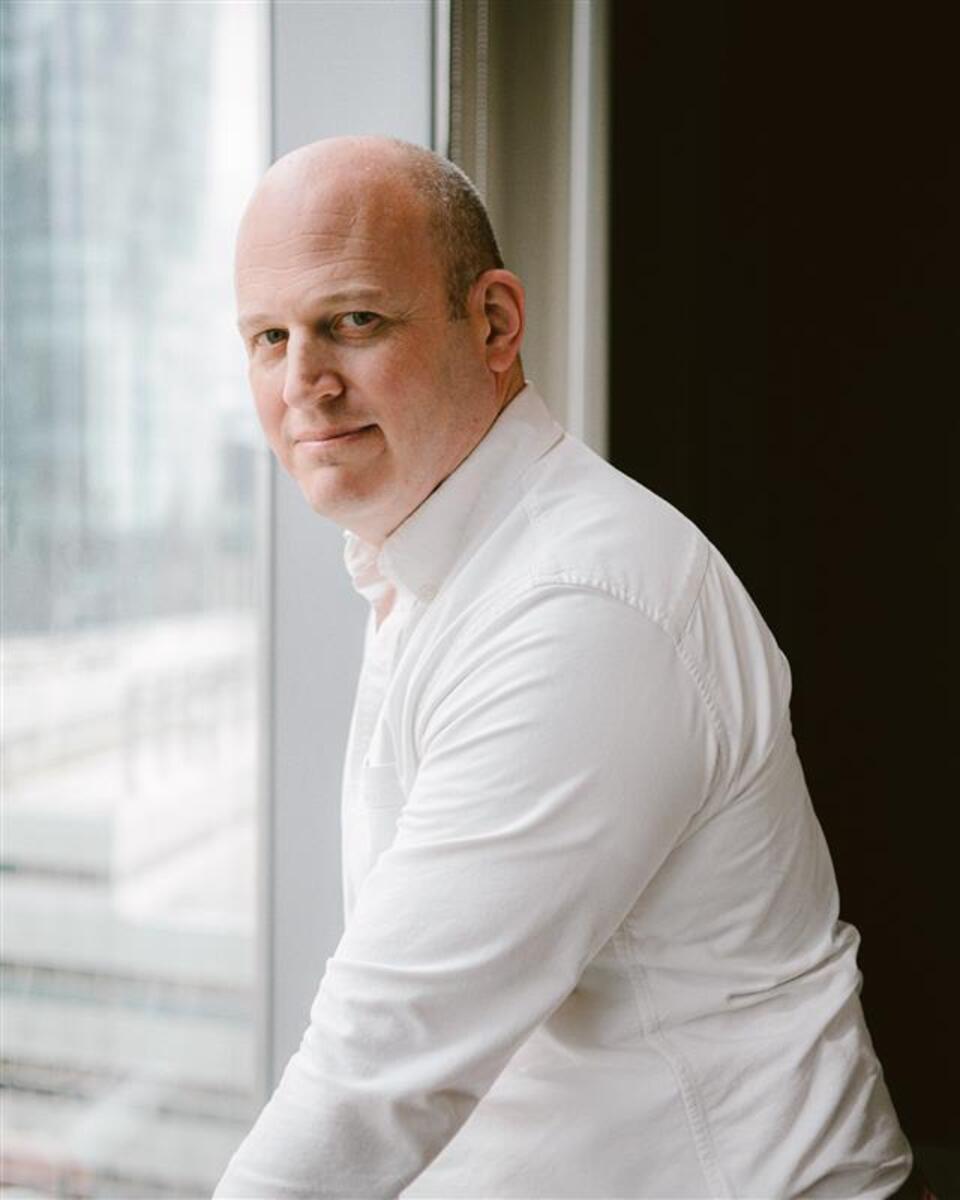
Emeka Chukwurah. Photography by Stephen Ross Goldstein
Emeka Chukwurah
Co-Owner, Rhythms of the Village, Altadena, Calif.
Retail store destroyed in the Eaton Fire, 2025
Rhythms of the Village was always a community magnet. Started in 1979 by Onochie Chukwurah, a musician who’d escaped the Nigerian Civil War and toured with Fela Kuti before finding paradise in Altadena, the family business celebrated Black culture—originally as a performing arts company and later as a retail store and cultural hub selling clothes, African art, carvings, and other imports.
The store was located on Lake Avenue in Central Altadena, once an unofficial border between neighborhoods due to historical redlining. When the Eaton Fire took it down in January, all that was left were a few soapstone trinkets. “But it takes one door to close for another door to open,” says Emeka Chukwurah, Onochie’s son, who now runs the store with his partner, Andrea McInnes. They have re-envisioned Rhythms of the Village as a mobile series of gatherings and set up a temporary location where they provide art and music lessons.
The first thing they did was start a giveaway center with clothes, air purifiers—anything people affected by the disaster might need. The donations flooded in. “The abundance created was really a spark for us to keep going,” Chukwurah says.
The business also attracted the media: TV news stations, newspapers, and The Jennifer Hudson Show all covered the family, which led to a pro bono ad of them being featured on the Grammy Awards.
The store previously sold Altadena merch like T-shirts and tote bags; people started asking for them because they “wanted to represent,” Chukwurah says, so he put in an order for about $2,000 with a supplier in downtown L.A. After the Grammy ad, he spent $60,000 for a larger run, and these sales have helped keep Rhythms of the Village afloat.
Chukwurah has only recently gotten to the hurdles of dealing with insurance. “While our policy technically covers up to $1 million for fine arts, which made up most of our inventory, it’s been challenging to access the full coverage,” he says.
Finding a new, affordable location for the store has been discouraging, with most places in the area leasing for $4,000 a month or more. He worries that the people coming into Altadena and getting land for a cheaper rate aren’t interested in investing in the community.
Chukwurah found out a few days after the fire that Andrea was pregnant with a second son. “We had him at home here in Altadena,” he says, “which feels like such a major silver lining, knowing he was born right in the community that shaped us, even after all we’ve been through.” Another door opening.

Christy & Janet Lee. Photography by Stephen Ross Goldstein
Christy & Janet Lee
Owners, Fair Oaks Burger, Altadena, Calif.
Neighborhood Burned in the Eaton Fire, 2025
Everything north, south, east, and west of Fair Oaks Burger was destroyed. But the restaurant run by the Lee family since 1987, on the corner of Fair Oaks Avenue and East Calaveras Street in Altadena, was, miraculously, left standing in the vast smoking emptiness. That doesn’t mean the business wasn’t scorched. The fences around the property burned, the solar connections melted, ash destroyed the HVAC and swamp cooler, and smoke infiltrated the kitchen.
When co-owner Christy Lee sneaked in to see the restaurant’s fate as soon as the fire subsided, she thought she’d return the next day to clean; she wasn’t allowed back for over two weeks. By then—with the power out—the raw chicken and ground beef stuffed in the freezers and all the eggs and vegetables in the fridge had rotted, and everything was covered in mold.
Lee fought the insurance company to have the roof and everything inside replaced. “The company is like, ‘You can get your griddle cleaned professionally.’ And I’m like, ‘Yeah, but then what about all the little screws? There’s no way you can absolutely clean that,’” she says. “I actually did end up getting a lot of the stuff covered. They finally sent me the checks a few weeks ago. But then I immediately got this non-renewal termination letter.”
While she was closed for nearly six months, Lee filled out grant applications “endlessly, which were like college essays,” mostly for $10,000 or less; she eventually got a low-interest loan for $75,000 from the L.A. County Development Authority. What kept the restaurant afloat was an opportunity to work with World Central Kitchen and other groups to get free food to people. “They paid us around $100,000,” Lee says. “It jump-started us, and got us back in the community.”
Business is much slower than before the fires, and the Lees have partnered with nonprofits and retailers on events, such as hosting free farmers’ markets and food distribution in the parking lot. Still, they’ve added four employees to their pre-fire staff. “I’m just trying to maintain the hours,” says Lee, “so when people do come back and start rebuilding, they know we’re here.”

Brett Turner. Photography by Mike Belleme
Brett Turner
Owner, Asheville River Cabins, Arden, N.C.
Flooded by Hurricane Helene, 2024
Six of Brett Turner’s 31 cabins were swallowed up by the French Broad River as it overflowed in September 2024. The rest sat higher on a ridge, and after power returned, he got them reopened, but business was almost zero. He says he put the loss at $1.2 million when the SBA asked him how much he’d need to get back up and running.
“Oh, my god, were they difficult to deal with,” he recalls. “I spent hundreds of hours trying to make them happy with documentation, and they just continued to beat my loan down.”
Turner says he pointed out to the SBA that he already had a $5 million loan with it, and if it didn’t give him enough money for disaster recovery, he could default on that larger one. “I had a couple of fairly heated conversations with the SBA about that,” he remembers.
“They were looking at my tax returns and performance and saying, well, we just don’t see how you’re gonna pay this loan back. And at one point, I said, ‘Maybe I shouldn’t have to.’ All these businesses during Covid got all this money for free.... And I mean, how much money have we given to Ukraine? We can’t give some of this money to these business owners in case of true need so they can survive?”
In the end, Turner accepted a $559,600 loan, which covered only his physical damage, not his economic loss. To build six new cabins, Turner used money he’d pulled from stocks along with the loan, plus about $40,000 in insurance payouts and a $50,000 grant from the Western North Carolina Small Business Initiative. The new cabins are mobile and made of wood and glass so that they can be pulled up a hill from the floodplain during a storm. In March of this year, FEMA arrived to clean up his property, which was a huge help, he says.
Turner says business is down 30 percent, but it was struggling before, bringing in about $1.4 million a year when he’d projected revenue at $2 million. Cost and interest rate increases have killed him, he says.
“If I stick with it and develop it over time, I think ultimately I’ll make a profit,” says Turner. “Our hope is that by next spring, Asheville will be back a hundred percent. But I don’t know. We’ll see.”

Shelene Hearring on the lot of Two Dragons Martial Arts; the business was located on Lake Avenue in Altadena for 17 years before it burned down in the Eaton fire on January 7, 2025. Photography by Stephen Ross Goldstein
Shelene Hearring
Owner, Two Dragons Martial Arts, Altadena, Calif.
Studio Burned Down in the Eaton Fire, 2025
At the time of the Eaton fire, Two Dragons, which had been at the same location on Lake Avenue and E. Mariposa Street for 17 years, had just gotten back on its feet after the pandemic. The company had only four employees, but they were busy conducting, on average, 20-plus sessions a week and serving a few hundred members annually. “And then, bam! It’s all the way gone,” says owner Shelene Hearring.
In the weeks after, she called all her students and asked them to gather at Brookside Park in Pasadena. About a quarter of them made it; most had lost their homes. “We were clinging to each other, lifting each other up, and bringing back that ‘we can get though this together,’” she recalls. What began as an emotional check-in evolved into a weekly practice. “That was my driving force to go and find a place. That was my need for getting started right away.”
But it was hard to know how. Hearring was in survival mode, living out of hotels. She applied for grants, but was frustrated that the process wasn’t more straightforward: “Why do I need to verify my address?” she wondered. “You have my address. There’s no building there.”
Media opportunities started coming: NBC, CBS, ABC, NPR, and the Pasadena Star-News. She also received a pro bono ad at the Grammys, and the exposure helped boost her GoFundMe campaign, which raised over $50,000. People from around the county also donated equipment, including uniforms, pads, gloves, wooden weapons, and safety gear. This allowed her to start teaching classes in temporary spaces that friends of the studio offered her on a part-time basis.
Ten months after the fire, Hearring hopes to create a shared space with other small businesses and neighborhood programs in the original location where she had always served the community. Her goal to purchase the Lake Avenue lot will require approximately $400,000 to $500,000, while completing the construction, she estimates, will cost $1.5 million.
“People say, ‘Oh, the government is coming in and they’re gonna give you some low-interest loans.’ Well, during Covid, we did those loans, and we’re still paying—to do it again would put us under instead of picking us up,” she says. This time she’s looking for investors and partners who share her vision.
The Covid pandemic prompted Hearring to start offering online classes, which brought in about a third of the pre-fire revenue. She’s also networking with other Altadena business owners who have always supported one another.
“We don’t go out to the big guy; we support our neighbors,” she says. “We are a community, and [the fire] made us become more aware of how important that is. Apart from anything else, it’s making us stronger.”

Jordan Catapano. Photography by Stephen Ross Goldstein
Jordan Catapano
Co-Founder, This Girl Walks into a Bar, Pacific Palisades, Calif.
Home destroyed in the Palisades Fire, 2025
When Jordan Catapano lost her home in the Palisades Fire, her business went with it. Catapano and her sister, Jocelyn Dunn, ran This Girl Walks Into a Bar out of her house for eight years. They employed nearly 90 women bartenders, booking them for parties and events, mainly around L.A.; in 2024, the company earned $350,000 in revenue. “It was really humming along,” says Catapano.
But after the fire, they dissolved the business because they’d lost too much—“all of our bartending equipment, all of our uniforms, tools, everything,” she says. “We didn’t have it properly insured.” Given the money and time they would need to get it all back up, it didn’t make sense when people were so scattered. “Even if you haven’t been directly affected by the fire, people aren’t having parties again.”
Instead, the sisters pivoted. Four years before, they’d put some of their profit into a cocktail mixers business, which brought in $35,000 in 2024 with one organic margarita mix. Now, they were ready to add two more flavors. “We finally weren’t going to be just a one-trick pony anymore with one SKU,” says Catapano. Most of the production run was safe in a warehouse in East L.A.; about 1,500 bottles had been in the house.
To support themselves, the sisters needed to get the product into stores. Catapano applied for every grant she could, and got $10,000 from Spanx founder Sara Blakely’s Red Backpack Foundation. They also got an SBA loan for $50,000 to cover basic operating expenses.
Then Catapano learned that media executive Jennifer Acree of JSA+Partners, whom she knew through her kids’ school, had formed a group of L.A. publicists who were donating their skills to help fire victims get media coverage. They booked Jordan on the Today show, after which Total Wine & More agreed to put the mixers in all of its California stores. “I’d sent them 27 emails since 2023,” says Catapano. “I think when you get validation from a show like that, it helps people see your business differently.”
Thinking of the nearly 90 women who lost their jobs when the bartending company closed, Catapano is anxious to be again in position to give back to the community.
“The goal,” she says, “is to sell our business and fund 10 other female-founded businesses.”

George Roberts. Photography by Camille Farrah Lenain
George Roberts
Co-Owner, Roberts & Roberts, Panama City, Fla.
Business damaged by Hurricane Michael, 2018
The employees bolted when the roof blew off. There were six of them in the building, and now they raced through the brand-new offices of Roberts & Roberts construction toward the dump trucks out in the yard. That turned out to be the safest spot for the team when Hurricane Michael, with its 161-mph winds, hit Florida’s Panhandle seven years ago.
When George Roberts arrived to see the damage, the team was fine. But sitting in his former office, he could look up at the stars. “It blew the roof off and all the windows. It ruined our computers and printers,” he says. They had just remodeled and moved in only five days before. “We were devastated.”
Roberts grew up in the family business, which dates back to 1971, and runs it with his older brother, Chuck. For two guys in the rebuilding industry, Michael screwed with their minds, Roberts says. “We are the ones who clean the roads up.”
In the immediate aftermath, Roberts didn’t know where to turn. None of the company’s 150 employees were hurt, but nearly a third lost their homes, and the scarcity of supplies was dire. “We had about a 40-mile-wide area that just was blown away. No stores. Nothing,” he says. What saved the business was a fellow member of the Florida Transportation Builders’ Association—a paving company called Ajax, which is based in Venice, a seven-hour drive south. Because Ajax hadn’t been hit, it was able to get supplies where they were needed, recalls Ajax CEO Mike Horan, who’d rushed out an email collecting donations. Ajax sent two semi-truckloads of toilet paper, tarps, generators, paper towels, and water. “A pile of water—that was the biggest thing. It was a lifesaver and we’ll never forget it,” Roberts says. “There’s not a lot of help in our business other than just your insurance.”
In some ways, Roberts & Roberts was lucky. Having just remodeled, the brothers had all the exact measurements and costs for the materials on hand, and insurance covered the loss. With its connections in the building industry, the company got its offices back up within six months.
The bigger problem was that the destruction in the area was so severe, it was impossible to do any road work. “So we weren’t even able to work on any of our jobs that we had under contract,” says Roberts. At the same time, their equipment had survived pretty well, “but we probably had 40 to 50 employees who lost their homes and moved off or went somewhere else and just never came back,” says Roberts.
About a week or two after Hurricane Michael, a disaster cleanup company, CrowderGulf, hired Roberts & Roberts to haul away dirt and debris. With that revenue to tide it over, the company was able to take on roadwork again in six to eight months. Still, it struggled to restaff. There was high need for workers to rebuild homes and businesses, and those jobs paid more, Roberts says, so the company was short-handed for a while. Eventually, though, it grew to 180 employees.
Last October, Hurricane Milton struck to the south, damaging the Ajax paving company, which has annual revenue north of $500 million. The main building had some flooding, but its eight asphalt plants were OK. The big problem, as with the Roberts brothers, was that many of Ajax’s 600 employees lost their homes.
“George calls me up ... and the next thing I know, I get a truckload of everything we’d need to help these people out,” says Ajax owner Horan.
Roberts was happy to jump in. “Michael devastated us,” he says, and when other businesses showed up to help, it was a godsend. So when Hurricane Milton hit, they did the same. “It was just the right thing to do,” Roberts says. “Pay it back.”

Lee Nelson. Photography by Desiree Rios
Lee Nelson
Owner, Guad & Co., Ingram, Texas
Retail Store Flooded by the Guadalupe River, 2025
Lee Nelson’s local goods and design store, Guad & Co., is named after the river that destroyed it on July 4, 2025. She’d opened eight months earlier in honor of her mother, who had passed away. The girls from nearby Camp Mystic loved coming in to browse among the trendy bandanna necklaces that were popular among them.
A torrential rainstorm caused the Guadalupe River to rise nearly 40 feet, killing 27 campers and counselors, and more than 100 other people in Texas Hill Country. The flood pushed through the back door and turned Nelson’s inventory, computers, and silkscreen and embroidery equipment into a toxic stew—a loss, Nelson estimates, of about $175,000. This, combined with the grief of losing some of the girls who came to the store, paralyzed her at first.
When Inc. talked to Nelson five weeks after the flood, the community was still caught in the snare of fresh trauma. But one thing they know is that they have a powerful bond and will do anything for one another. For a while, most efforts were focused on search and recovery. “There wasn’t a lot going on about rebuilding of businesses,” says Nelson. “That’s just coming about right now.”
Nelson has moved some of her business online and has used a third-party company to start making shirts and hats that say things like “Make Ingram Great Again.” She also got a vendor in San Antonio to donate 500 camp-themed charm bracelets. “Vendors have sent me replacement products or free products,” she says. “Maybe it’s not a huge thing, but as a business owner, it’s given me a lot of hope.”
Bills came due in late July and August, and thankfully, a few grants—one from LiftFund for $5,900 and others distributed by the Community Foundation of the Texas Hill Country, which is funneling approximately $100 million in donations to flood survivors—have helped. But that covers less than about 30 percent of the loss, so Nelson still needs to raise money to replace her equipment and start creating again.
The community has inspired her to keep going. “My friend’s daughter Renee, who passed away, she was always at my shop,” says Nelson, who raised over $20,000 through the charm bracelets for her memorial fund. “Her mother encouraged me to rebuild for her daughter. That’s enough of a reason, you know?”

Javon Frazier. Photography by Stephen Ross Goldstein
Javon Frazier
Founder and CEO, Maestro Media, Los Angeles
Home destroyed in the Palisades Fire, 2025
Five years ago, Javon Frazier quit his career as a gaming executive to start his own company and spend more time with his family. To launch Maestro Media, he had to pull money from his house in the Crenshaw neighborhood of Los Angeles. It was an enormous risk, but within 90 minutes, the Kickstarter campaign for his first card game raised $1 million; in 30 days, it raised $6.7 million.
But after a burglar broke in, Frazier moved his wife and two daughters to a magical 1941 house in Pacific Palisades, with charming nooks and handcrafted stained glass. It became the place that grounded Frazier amid the chaos of growing his company by 2,300 percent over the next four years, creating games for brands such as Disney, Hello Kitty, and Clash of Clans. His home office was filled with thousands of comics he’d collected since age 7, including signed issues from legends such as Stan Lee. It was also packed with prototypes for games he was developing for Maestro, a two-time Inc. 5000 honoree. But on January 7, the Palisades Fire roared down the mountains, taking his dream home, and much of what he’d built with his $14 million business.
Since then, Frazier has had to find a place to live and work, get one child into a new school after hers burned down, and help both of his daughters, ages 10 and 14, deal with the trauma of losing their home, friends, church, and community. All of this while navigating insurance documents—the family would receive only some of what they needed to fully rebuild their home and his office. The challenge now is how to rebuild it in a place that looks like a Mad Max landscape.
“You can’t go with a hammer and nails and try to build this house. It’s not happening,” says Frazier. “Just do the things to be successful for today. Be present—that’s my new mantra.”
His “today” includes launching new Maestro games, expanding the company’s retail footprint in the U.S., Europe, and soon worldwide, navigating tariffs that have slowed down purchase orders, and steering his seven full-time employees, who live all over the world.
Frazier talks to his business coach every two weeks, which “has helped me lead with more clarity and gratitude instead of just urgency,” he says. “I can’t partition family stuff—it’s so co-mingled.... You want to date your wife, but your dates consist of filling out insurance papers.”
Meanwhile, Frazier has set up a home office in the old Crenshaw house, which they had rented out. He’s back where the business all started. “I like to call it a reverse Fresh Prince of Bel-Air,” he jokes.
“I don’t think the fire affected our revenue expectations,” says Frazier. “If anything, I’m more determined. Because it’s such a hard reset of my life, I’m determined to kind of get back what I lost. Because I’m so aware of this moment in time and trying to make sure it’s not a failure.”