In partnership with

Meet America’s Newest $1B Unicorn

A US startup just hit a $1 billion private valuation, joining billion-dollar private companies like SpaceX, OpenAI, and ByteDance. Unlike those other unicorns, you can invest.
Over 40,000 people already have. So have industry giants like General Motors and POSCO.
Why all the interest? EnergyX’s patented tech can recover up to 3X more lithium than traditional methods. That's a big deal, as demand for lithium is expected to 5X current production levels by 2040. Today, they’re moving toward commercial production, tapping into 100,000+ acres of lithium deposits in Chile, a potential $1.1B annual revenue opportunity at projected market prices.
Right now, you can invest at this pivotal growth stage for $11/share. But only through February 26. Become an early-stage EnergyX shareholder before the deadline.
This is a paid advertisement for EnergyX Regulation A offering. Please read the offering circular at invest.energyx.com. Under Regulation A, a company may change its share price by up to 20% without requalifying the offering with the Securities and Exchange Commission.
Hello, and welcome back to Inc.'s 1 Smart Business Story. It started with a late-night scare on a Manhattan street corner. A stranger was following a young venture capitalist home from the subway. He had no time to call for help and no clear way out. That moment of helplessness planted a seed that would eventually grow into a company now handling half a million emergencies every day.
RapidSOS, founded in 2015, just hit unicorn status with a fresh $100 million raise, bringing its total funding to $450 million. The platform uses AI to connect emergency detection data directly to first responders, and today serves one million emergency personnel across a dozen countries.
What makes this story remarkable goes beyond the billion-dollar valuation or the sheer scale of what the company has built. When the founder started digging into America's emergency infrastructure, he uncovered something so broken and so overlooked that almost no one had thought to fix it, until now.
In this story you’ll find:
How RapidSOS was able to scale across a dozen countries
Why America's 911 infrastructure is more outdated than most people realize
How AI is reshaping the way first responders manage emergencies in real time
This Emergency Software Company Just Became the Newest Unicorn Following a $100 Million Fundraise
BY BRIAN CONTRERAS, STAFF WRITER
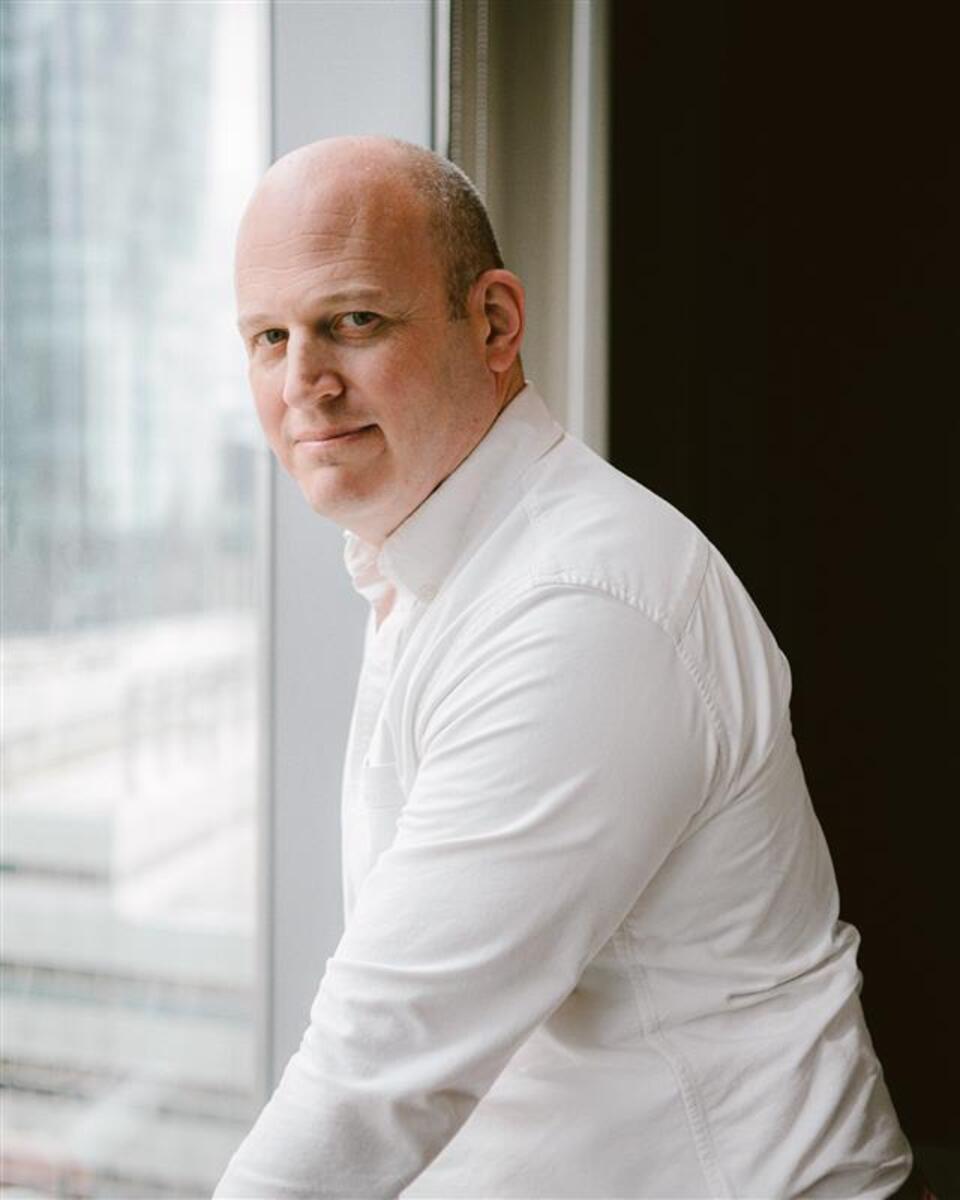
It was 2 a.m. in Manhattan the first time Michael Martin ever thought about calling 911.
Raised in Indiana, Martin moved to New York after college to work in venture capital. One night in December 2012, as he left the subway at 110th street and Lexington Avenue heading home late from the office, a stranger started following him.
“Your mind is just racing in that moment,” Martin tells Inc. “I cross the street; he crosses the street. I break into a jog, he breaks into a jog. … In my mind, I was like, ‘Man, there’s no way I’m gonna be able to get out my phone and call 911. What do I do?’”
Everything worked out fine—he ended up catching a taxi to quickly get away from the man—but the experience stuck with him. It would eventually lead him to found RapidSOS, a public safety software startup for which he’s now CEO, in 2015.
It’s big business. Today, RapidSOS announced a $100 million Series D, led by Apax Digital—the growth and late-stage investment arm of private equity firm Apax Partners—bringing the company’s total outside capital raised to $450 million, and earning it unicorn status in the process with a valuation now over $1 billion.
That money will go toward helping the company scale, including with its footprint abroad, Martin says: “We’re live in a dozen countries [but] we’ve barely scratched the surface.”
At its core, RapidSOS detects emergencies—whether because someone reports one or because a sensor, from an Apple Watch to a workplace panic button, detects an issue—and then uses AI to structure the relevant data and quickly pass it along to first responders. The company estimates that one million first responders around the world use its platform.
There are 240 million 911 calls a year in the U.S., Martin says: the equivalent of about seven for every 10 Americans. Nevertheless, he adds, the infrastructure is outdated, some of it dating back more than half a century.
“Quickly, we learned it was a national infrastructure challenge, but there was no federal oversight,” he says. “It was like every small town in America was supposed to somehow figure this stuff out.”
After going to Harvard Business School and meeting his co-founder Nick Horelik, then a nuclear engineering PhD candidate at MIT, Martin launched RapidSOS. After lots of cold calls and site visits to 911 call centers, the company has now built a major foothold in the emergency services ecosystem.
“We basically unified 22,000 federal, state and local agencies in a dozen countries on one interoperable AI platform that today manages about 500,000 emergencies a day,” Martin says. “We just crossed a billion emergencies supported earlier this year. It’s just amazing to see how these agencies use this technology to save lives.”
In addition to fueling growth in international markets, Martin says the new funding round will help RapidSOS further develop its AI software and expand its network of emergency detection data. (For instance, he says by way of an example, intel from a baby monitor about an infant’s breathing should be accessible to an ambulance if you call 911.)
With many financing rounds under his belt, Martin has built RapidSOS into an industry powerhouse. But it all comes back, he says, to the first responders he’s helped support and the lives he’s helped save.
“Work on something that you really believe in, and that matters,” he says. “That’s been just the most extraordinary privilege. … Purpose has to underpin what you’re doing.”